

Updated: 29.04.2026
Summary: Structured Data & AI Search
- Structured data follows a predefined format and helps search engines like Google understand your content.
- Various types of data, such as products, recipes, reviews, stars, articles, FAQs, how-to guides, job offers, people, organizations, places, and videos, can be displayed with schema markups.
- Several studies show that structured data can significantly improve click-through rates (CTR), visibility, and user engagement.
- Structured data can be integrated with JSON-LD, Microdata, or RDFa, whereby JSON-LD is preferred by Google.
- AI relies heavily on visible, well-structured content, including headings, paragraphs, lists, and tables.
- This leads to a need for dual optimization. For traditional Search Engine Optimization (SEO) and Google, use schema markup, while for AI search (GEO), use clear, structured, and informative text.
Why is Structured Data Important?
Structure brings clarity—whether in life or in data.
Without structure in life, nothing works or everything goes haywire. You can relate? Well, so do I and so do our search engines. They love it when our website contains structured data.
Why? Because not only search engines like Google and Bing, but also LLMs (ChatGPT, Perplexity, Gemini) can then analyze your content and present it more effectively. This, in turn, benefits us as operators because a better presentation leads to more visibility.
In this guide, we will explain what structured data is and how you can implement it for SEO and AI visibility.
What is Structured Data?
Structured data is organized in a clear, predefined format. This pattern is easily decipherable by data analytics tools, machine learning algorithms, and human users. The data is arranged into rows and columns, such as names and phone numbers.
It is widely used in systems like SQL databases and works efficiently with structured query language, allowing fast and accurate data retrieval.
Structured data should accurately reflect the visible content on the page. Misleading or improper markup can lead to penalties from Google. So, it is necessary to improve your organic reach.
Structured data is of two types.
- Quantitative data (ratings, dates, phone numbers or prices) and
- Qualitative data (brand names, authors, FAQs review texts, locations and other details).
For example, a product listing with fields like product name, price, availability, and ratings stored in a database is structured data.
You can see the details of different types of structured data markup that are supported by Google Search.
What is Semi-structured Data?
Semi-structured data is a type of data that lies between structured and unstructured data.
It does not follow a fixed table format like structured data. However, it still has some level of organization through tags, labels, or key-value pairs. This makes it easier to process compared to fully unstructured data. Examples include JSON files, XML files, emails, and log files. It is flexible in format but still carries meaningful structure for interpretation.
What is the Difference Between Structured and Unstructured Data?
Unstructured data, unlike structured data, does not follow a predefined format and has a more complex format. It is more flexible and often comes in the form of text, images, audio files, videos, or social media posts and social media comments (Jonker 2026).
While this type of data is rich in information, it is more difficult for machines to process and understand, as it lacks organization. For instance, an email, a blog post, or a video file.
Unstructured data comprises 90% of all enterprise-generated data and can contain both textual and nontextual data, making it more versatile for data insights but harder to process and analyze.
What is Schema Markup in SEO?
Schema markup is a type of structured data. It is a code that you add to your site. It offers a set of tags that you can add to your website’s HTML to help search engines and AI systems better understand your content.
Each page should have a clear URL so the search process can connect the markup with the correct content.
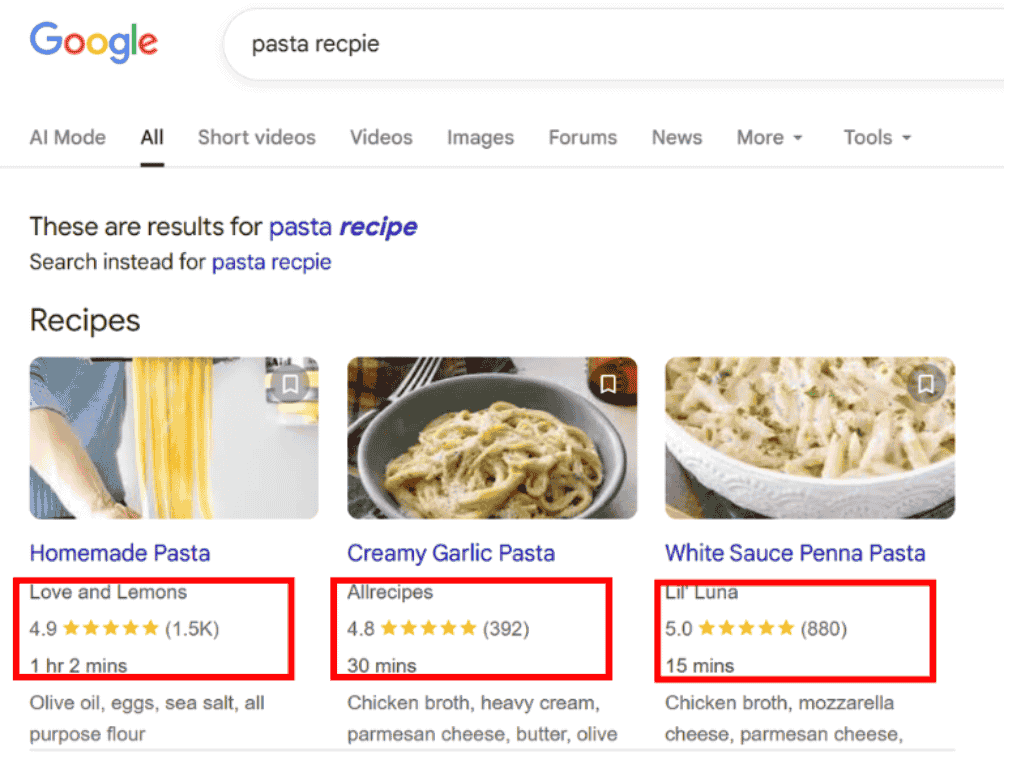
When you add schema markup to your pages, Google Search can display your content in enhanced formats called rich snippets on SERPs (Search Engine Results Pages).
Now, what are rich snippets, rich result and SERPs?
Rich Snippets
These are search results that contain additional information, such as star ratings, prices, product availability, or author details. This information is taken from the structured data of the site and displayed in the search results.
SERPs
While SERPs are the pages that are displayed by search engines in response to a search query. Structured data can help a site to be displayed prominently in the SERPs by enabling rich results.
Rich Result (Rich Search Results)
A rich search result, also called rich result, is an enhanced search result that offers more interactivity and visual components than simple text snippets. This can include a single rich result, a rich card (mobile-optimized rich results) or other advanced search result formats.
Because of schema markup, users can quickly see important information directly on the SERPs without even opening the page, making your content more informative. This ultimately improves your visibility and overall SEO performance.
Why is Structured Data Important for SEO?
Even though structured data is not a direct ranking factor, but its impact is measurable and significant.
Proven results from case studies;
- Websites with structured data saw 25% higher CTR (Rotten Tomatoes)
- Pages with rich results achieved 82% higher click-through rates (Nestlé)
- Food Network increased visits by 35% after structured data implementation
- Rakuten users spent 1.5× more time on structured pages
Step-by-step: How to Use Structured Data?
There are various methods for integrating structured data. The most common are:
| Format | Description | How It Works | Best For |
|---|---|---|---|
| JSON-LD | A JavaScript-based format for structured data and Google’s preferred method | Added as a <script> block in the <head> section or before the </body> tag (Ianovskaia 2024) | Beginners, SEO professionals |
| Microdata | Structured data embedded directly within HTML elements using attributes | Added inside HTML tags (e.g., <div itemprop="name">) | Developers comfortable working within HTML |
| RDFa | A more flexible format for embedding structured data in HTML | Uses extended HTML attributes to define relationships and data (Paruch 2026) | Advanced users needing flexibility and detailed data relationships |
How to Implement Structured Data with JSON-LD for Google Search?
- Identify relevant content: Think about which content on your website is suitable for structured data. If you run an online store, this could be product information, reviews or articles. If you have a company site, the presentation of people, your company, and job offer is particularly relevant for you.
- Choose the right schema: Decide on the right markup scheme that best suits the content of your website.
- Create the JSON-LD code: Use tools like the Schema Markup Generator from Merkle to create the appropriate code.
- Paste the markup into the HTML code: Copy the generated code and paste it into the <head> area or directly before the </body> tag of your HTML page.
- Test your structured data: Use specialized tools for structured data testing to check your markup for errors:
Google Structured Data Testing Tool: This tool allows you to check your built-in code.
Rich Results Test: This tool shows you how your structured data appears in the search results.
Schema Markup Validator: Another useful tool for validating your markup. - Monitor and adjust: Keep an eye on the performance of your structured data in search results and adjust the markup as needed to get the best results.
How to Troubleshoot Structured Data?
- Error 1 (Missing or incorrect attributes): Ensure that all required elements are present and correct.
- Error 2 (Incorrect placement of the code): The JSON-LD data should be placed in the area or directly before the tag of your page.
- Error 3 (Data does not match): The JASON-LD data should match the visible data on your page.
Now you know how to insert structured data on your web page and which tools you can use to improve the performance.
Would you also like to transform your company website from a business card into a lead-generating machine?

Learn more about our services!
How Does Structured Data Improve Visibility in AI-Powered Search?
AI-powered search is changing how content is discovered and presented. This raises an important question: Does schema markup actually help you appear in AI-generated results? The answer is nuanced. Structured data still plays a role—but not equally across all AI platforms.
Does Google AI Mode Use Schema Markup?
Within Google’s ecosystem, structured data is highly relevant.
Google’s AI systems (including AI Overviews and AI Mode) are closely integrated with traditional search. Because of this, schema markup helps:
- Understand entities (products, organizations, people)
- Connect relationships between topics
- Extract structured, reliable information
This improves your chances of being selected in AI-generated summaries and rich results.
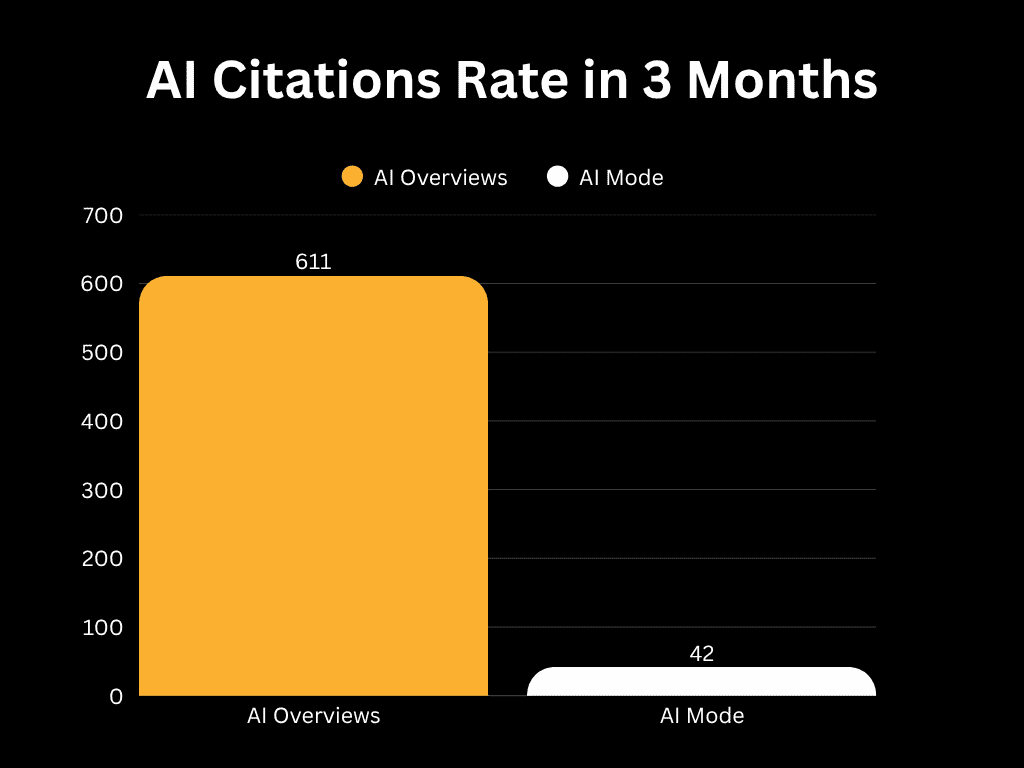
A large-scale 3-month experiment by Otterly.AI tested the impact of schema markup on over 2,000 pages.
The results suggested that 6 out of 7 AI search platforms could not read schema markup. Interestingly, one AI system even hallucinated schema data instead of correctly reading it. This shows that many AI tools do not reliably process structured data.
Moreover, implementing schema markup can significantly increases in AI citations, in some cases exceeding 600% growth in just 3 months.
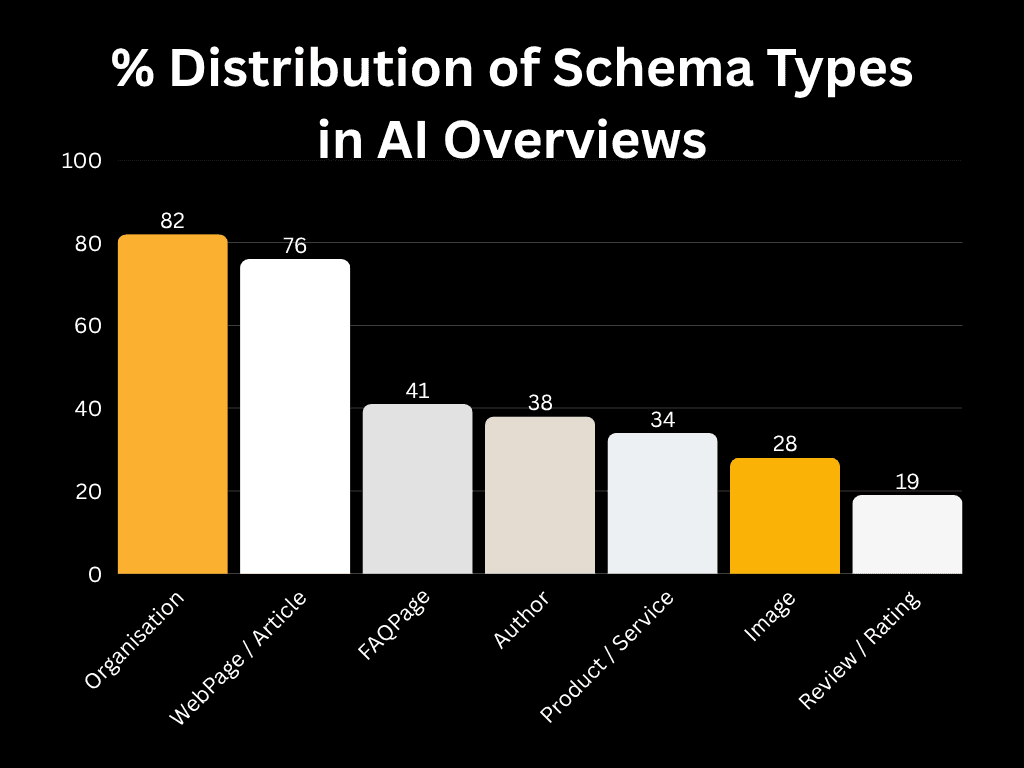
Furthermore, a separate study shows that schema is widely used. However, no specific type beyond common ones like Organization, Web Page, or Article provides a clear advantage (Taylor 2025). For this purpose, an analysis was performed on 107,352 URLs cited in AI Mode. It showed that Google does not favour any particular special schemas for citations.
See the chart below for details;
Why do AI Systems Ignore Schema?
The experiment also explains why schema often fails in AI search.
Many AI systems:
- Strip JSON-LD and metadata
- Remove scripts and styling
- Process only simplified page content
What remains:
- Headings
- Paragraphs
- Lists
- Tables
This means AI treat pages as plain-text documents, not structured code.
One of the most important findings shows systems failed to answer questions even when the correct data existed in schema markup
Why? The information was not present in visible content. This reinforces a core GEO principle:
- Schema-only data often gets ignored
- AI use visible structured content
What Improves AI Search Visibility?
Based on the experiment and broader research, AI visibility improves when content is:
- Clearly structured with headings (H1–H3)
- Written in direct, simple language
- Organized into lists and sections
- Rich in context and related entities
AI prefers readable, structured text over hidden markup.
How to Prepare Your Content for AI?
Marketing teams can improve their content for AI by following these simple steps:
- Review your structured data: Check what schema markup you already have and find missing areas. Make sure it clearly shows relationships between your pages.
- Define your key entities: List your main items like products, services, people, and topics. Use schema markup to describe them clearly and consistently. Also, identify the main page for each (entity home).
- Connect your content: Link related topics and entities together. This helps AI systems understand how your content is related.
- Include structured data in your AI plans: Treat it as part of your AI strategy. Use it for content that may appear in AI overviews, chatbots, or other AI platforms (Berkel 2025).
- Create a clear workflow: Set up a process to create, review, and update schema markup regularly.
In the macIT case study, TRYSEO played an important role in improving the use of structured data. It helped ensure that schema markup was correctly implemented across the website, making the content easier for Google search to understand.
TRYSEO supported the identification of key entities such as services and topics, and ensured they were consistently marked up. This improved how content was interpreted and appeared. Another important part was aligning SEO with AI visibility strategies (GEO). Instead of focusing only on rankings, TRYSEO ensured the content could be used as a trusted source in AI-generated responses.
Key Takeaways
- Structured data enables rich results, such as star ratings, images, prices, and FAQ dropdowns, which make listings more visually appealing.
- Schema markup uses a standardized vocabulary from Schema.org, which provides guidelines for implementing structured data to help search engines categorize content accurately.
- Structured data simplifies data querying and reporting. This enables fast and precise retrieval of information using tools like SQL, which enhances accuracy and clarity in presenting data-driven findings.
- Structured data supports AI and voice search by making content easier for assistants to parse and understand.
- To improve visibility in AI search, focus on clear headings (H1–H3), short, concise paragraphs, and well-organized lists and tables.
Conclusion: Structured Data for Better Search Results
Structured data is a part of SEO and a powerful tool. They make your website easier to understand for Google and crawlers.
This increases your visibility, as structured data can be used to display content on your site, such as products, articles, events, people, and job advertisements in the search engines as rich results.
This helps you to achieve better rankings, a higher click-through rate, and more potential customers. The advantages of structured data are enormous, and implementation is easy thanks to JSON-LD.
You want to structure your website but have a lot of data and don’t know where to start? Then write us a message now, we will support you!
FAQs
- What is structured data in simple terms?Structured data has a fixed schema and fits neatly into rows and columns, while unstructured data lacks a fixed schema and can have a more complex format, such as audio files and web pages. The standardized organization of structured data supports robust analytics and insights, making it easier to integrate with analytical platforms to uncover trends, patterns, and anomalies.
- What are the benefits of structured data?Structured data ensures high data accuracy and reliability by defining data types and constraints, which minimizes errors during data input and management, thus maintaining data integrity and quality.
- What is the biggest mistake in using structured data?Adding information only in schema markup but not presenting it on the page. AI often ignore hidden data.
- Do AI tools like ChatGPT or Gemini use schema markup?Not reliably. Many LLMs strip out schema and focus mainly on visible content like headings, paragraphs, and lists.
- How does structured data help with system integration?Structured data integrates easily with existing and legacy systems, improving efficiency and reducing complexity when managing data across different platforms.
- Is structured data required for SEO?No, structured data is not required for SEO, but it is highly recommended because it helps search engines to better understand your content and can improve how your pages appear in Google search results.
Would you also like to transform your company website from a business card into a lead-generating machine?
Learn more about our services!
References
- Berkel, M. (2026). “Structured Data’s Role in AI and AI Search Visibility.” Search Engine Journal: https://www.searchenginejournal.com/structured-datas-role-in-ai-and-ai-search-visibility
- Ianovskaia, O. (2024). “Structured Data and SEO: What You Need to Know in 2025.” Search engine Land: Structured data and SEO: What you need to know in 2025
- Jonker, A.; Gomstyn, A. (2026). “What Are the Key Differences Between Structured and Unstructured Data?” IBM: Structured vs. Unstructured Data: What’s the Difference? | IBM
- Paruch, Z. (2026). “What Is Schema Markup? & How to Add It to Your Site.” Semrush: What Is Schema Markup? & How to Add It to Your Site
- Taylor, D. (2025). “Does Schema Help You Surface More in Google’s AI Mode?” SALT agency: https://salt.agency/blog/schema-ai-mode

