


Summary: The New Rules of Search for CMOs
- SEO remains the digital trust layer — the signal AI and humans both use to judge credibility.
- Generative Engine Optimization (GEO) is the new layer of visibility — making your brand discoverable in AI-generated content and AI search results across ChatGPT, Gemini, and Perplexity.
- B2B CMOs must integrate SEO strategy + GEO. SEO builds trust; GEO expands reach and captures high-intent buyers who ask AI tools complex technical questions aligned with user intent and search queries.
- Even modest AI-driven visibility (5–10% of total search referrals) can deliver outsized ROI because AI-referred organic traffic tends to convert better.
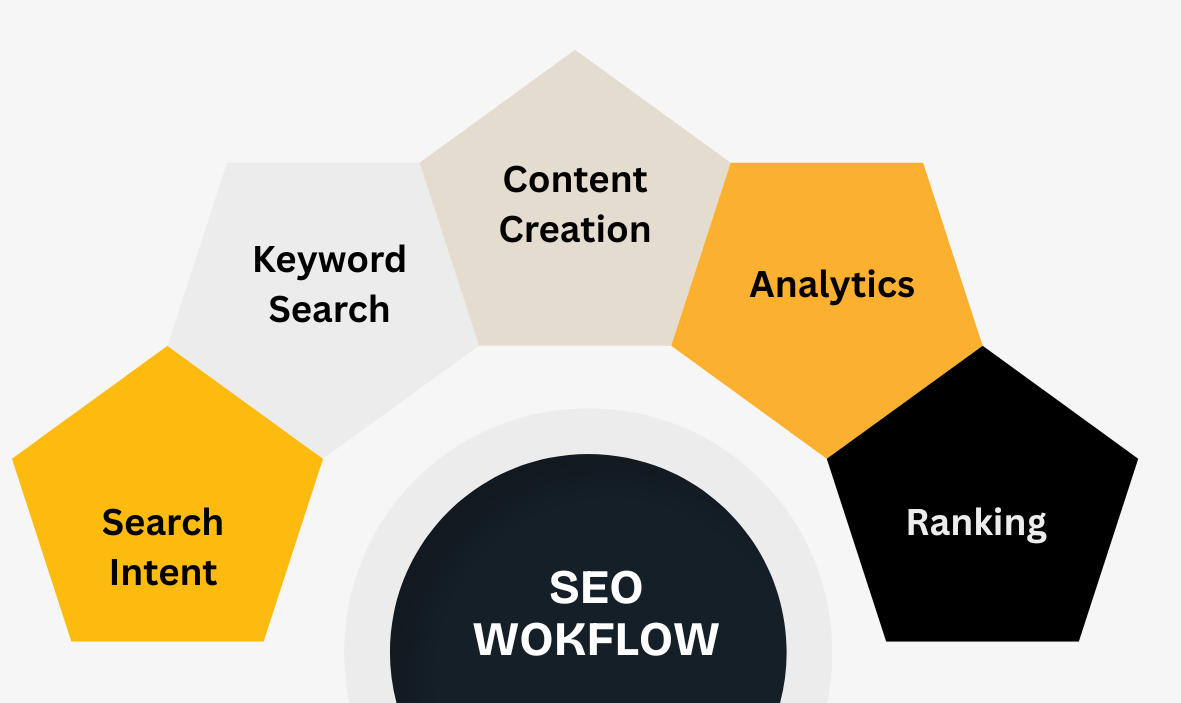
- Leading CMOs now track AI citations alongside keyword rankings — using structured data to bridge both worlds. This builds an SEO foundation that fuels GEO dominance in the evolving search engine landscape.
The CMO’s Dilemma in the Age of AI-Search
In the presence of ChatGPT, Gemini, Perplexity, and other AI platforms, many CMOs are asking: “Is SEO still relevant — or should I pivot to GEO (Generative Engine Optimization) entirely?” The short answer: SEO is evolving, not dying. Smart B2B digital marketing strategies, including a comprehensive SEO strategy, will integrate SEO + GEO.
Smart digital marketers understand that this hybrid model is the future of search results optimization. And that’s exactly where TRYSEO helps forward-looking CMOs win. Using its GEO KPI Framework, TRYSEO enables B2B companies with complex buyer journeys to measure, optimize, and scale visibility across traditional search engines and AI-driven search.
Below, we map that future — with real numbers, examples, and actionable tips your marketing team can use right now to boost rankings and improve SEO performance.
Why SEO Still Matters for B2B Marketing
SEO as Digital Trust Baseline
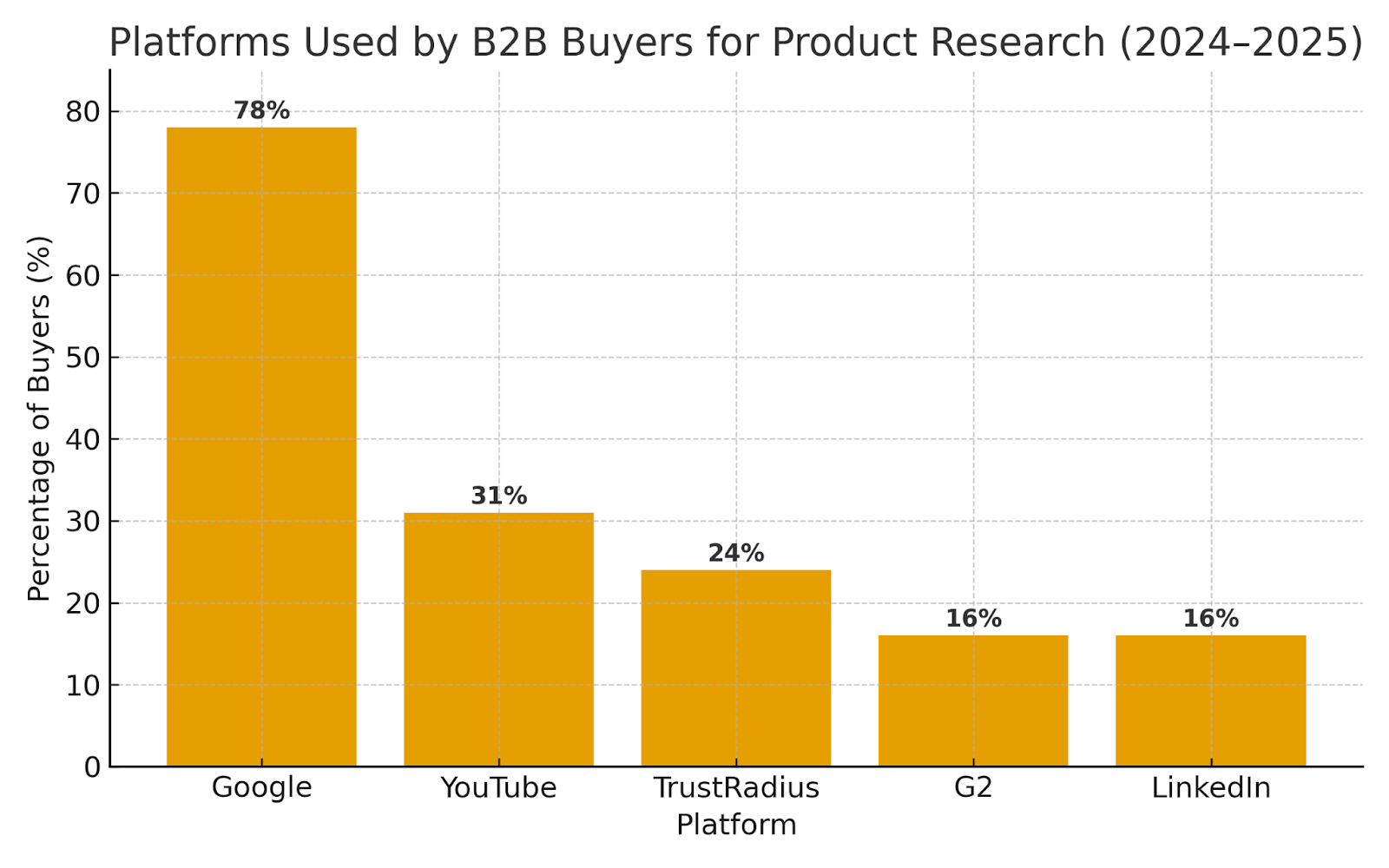
78% of enterprise buyers said they use Google to research products (Bhagat 2024).
70% of decision-makers equate Google visibility with brand legitimacy (Bradley 2024).
Cutting SEO spend weakens not only your organic search traffic but also the authority signals that high quality content generates. AI models and search algorithms use to identify credible sources. This reduces your brand’s visibility in both search pages and AI results. Even in an AI-driven world, Google rankings remain the credibility filter in complex buyer journeys.
Would you also like to optimize your company for AI and become visible there?

Find out more about our services!
What’s Changing for B2B in the Search Landscape
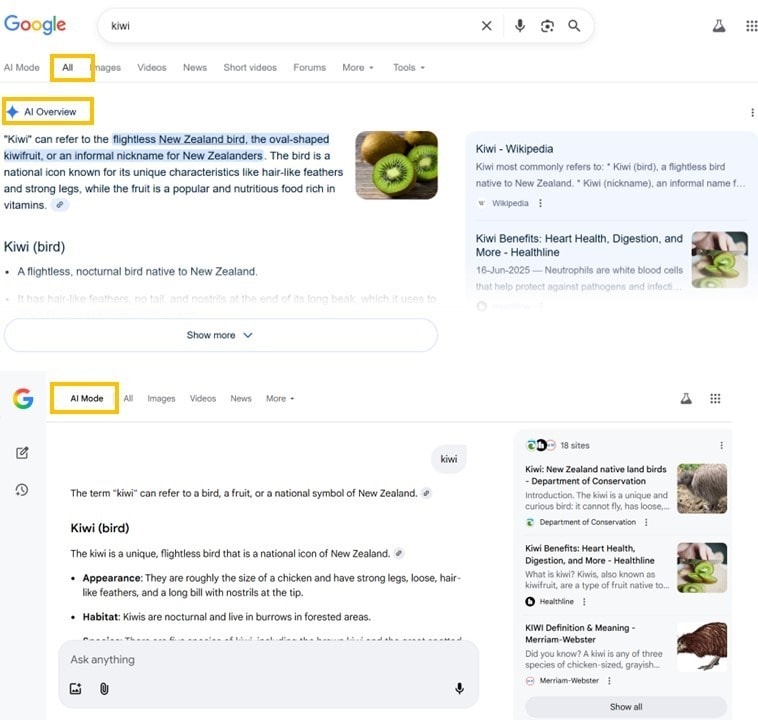
Organic traffic is under pressure, especially for informational queries. A study states a 34% drop in CTR in presence of Google’s AI Overviews (Goodwin 2025). SparkToro data suggests that 58% of Google searches now end in zero-click searches — driven in part by AI summaries (Fishkin 2024).
But top Google rankings still influence AI results. An analysis of 25,000 searches found that websites ranking #1 on Google appear in AI-powered answers about 25% of the time (Rudzki 2025). According to Search Engine Land, among 8,000 AI‐engine citations studied, the probability of your brand being cited in AI results correlates with your strength in technical SEO, content quality, domain authority, relevance and content depth (Allen 2025).
However, AI engines cite sources beyond the Google Top 10 (Linehan 2025). Study shows over 93% of links in Google’s AI Overviews came from outside the top-10 organic results (Toole 2024). This means that lesser-known pages or deeper blog articles are being surfaced via AI even if they’d never reach first-page ranking — showing new search trends and opportunities.
B2B discovery is already blending AI search and traditional SEO. Up to 72% of B2B buyers reportedly encounter AI Overviews during their research process (Allison 2025). However, 90% of users still click through to cited sources to validate the information.
Adoption is uneven but accelerating — habits persist. Moran (2025) notes that while AI-driven search is reshaping user queries and behavior, many users default to Google, giving hybrid ecosystems (search + AI) a foothold. A survey found 85% of North American marketers expect AI to positively affect SEO in 2025, suggesting optimism about coexistence, not replacement (Sevilla 2025).
Why SEO Remains Important (Even in an AI Era)
Brand Credibility, Source Trust, and Halo Effect
In B2B digital marketing, decisions are rarely instantaneous. When an AI overview cites your brand, it acts as a “preview referral” — your company gains visibility, and buyers may land on your site to vet the response. That click-through (even if modest) carries higher trust because the user is entering from a trusted AI search context.
Because 90% of users click cited sources in B2B contexts, weak or shallow content won’t be trusted even if it's surfaced.
Ranking in Google’s top slots still signals authority, which enhances your chances, contrary to the belief that SEO dead. of being cited in AI answers (per the 25% #1-to-AI finding).
Stable Traffic "Backstop" & Niche Demand
While AI may erode portions of traffic, SEO still delivers sustainable volume for long-tail keywords, niche queries, and search intent-driven questions. Many B2B buyers begin their journey with “how-to” or deep technical queries, which remain targets for keyword research and traditional SEO. Moreover, SEO is resistant to platform lock-in: your audience can still find you outside any specific AI engine.
Amplification and Synergy
When a page surfaces in AI output, its underlying high-quality content often gets more engagement — longer time on page, deeper exploration, and more lead-form submissions. Better SEO increases your baseline authority and topical coverage, which in turn improves your chances of being surfaced by GEO systems.
Nexova B2B case study illustrates this synergy. Targeted SEO and content optimization drove a 2,300% increase in organic rankings and qualified leads — proving how better content strategy and authority translate into tangible business outcomes.
GEO: The New Layer of B2B Visibility
Generative Engine Optimization (GEO) complements SEO efforts by ensuring your brand appears in AI-curated summaries, direct answers, and citations.
Why GEO Matters for B2B CMOs
| Benefit | Why It Matters |
|---|---|
| High-Intent Visibility | AI queries are often late-stage, matching user intent for conversions. |
| Niche Content Exposure | Structured, data-backed content performs well in AI answers, even without top Google rankings. |
| Thought Leadership Amplification | Reports, FAQs, and technical insights can appear directly in AI summaries. |
SEO vs GEO: Where ROI Lives
| Strategy | ROI Driver | Key Metrics |
| SEO | Trust + Early-Stage Leads | Organic traffic, domain authority, CTR, backlink quality |
| GEO | High-Intent Conversions | Brand mentions in AI answers, AI-referred sessions, citation frequency |
Would you also like to optimize your company for AI and become visible there?
Find out more about our services!
Where GEO Adds Value for B2B CMOs
If SEO ensures your content is findable and credible, GEO ensures your content is citable and usable by AI search engines.
Citation-Engine First Design
To win inclusion in AI answers, your content must be structured data, fact-dense, and citation ready.
AI answer engines (ChatGPT, Gemini, Perplexity) often use Natural Language Processing (NLP) and Retrieval-Augmented Generation (RAG) to fetch candidate passages before synthesizing a response.
A citation audit found that only 51.5% of generated sentences are fully supported by citations and 74.5% of citations are valid (Liu 2023). That means weak content or keyword stuffing won’t survive in AI-generated search results.
So structure your content to:
- Surface key facts, data, and definitions in clear sections
- Use in-text referenceable attributes (year, source)
- Include entity linking and metadata for better recognition
- Add “In brief” or “Key facts” summaries to align with AI tools’ synthesis patterns
Topic-Entity Authority Over Keyword Targeting
Keyword-based SEO is insufficient in the AI era. Instead, AI prefers topic coverage and entity depth. In practice:
- Use a content strategy built around pillar and cluster models.
- Develop relevant content using target keywords and conversational queries that reflect user intent.
- Optimize for voice search and AI-driven discovery through entity modeling and helpful content that demonstrates human expertise.
Metadata and Structured Signals
GEO optimization must go deeper into technical SEO:
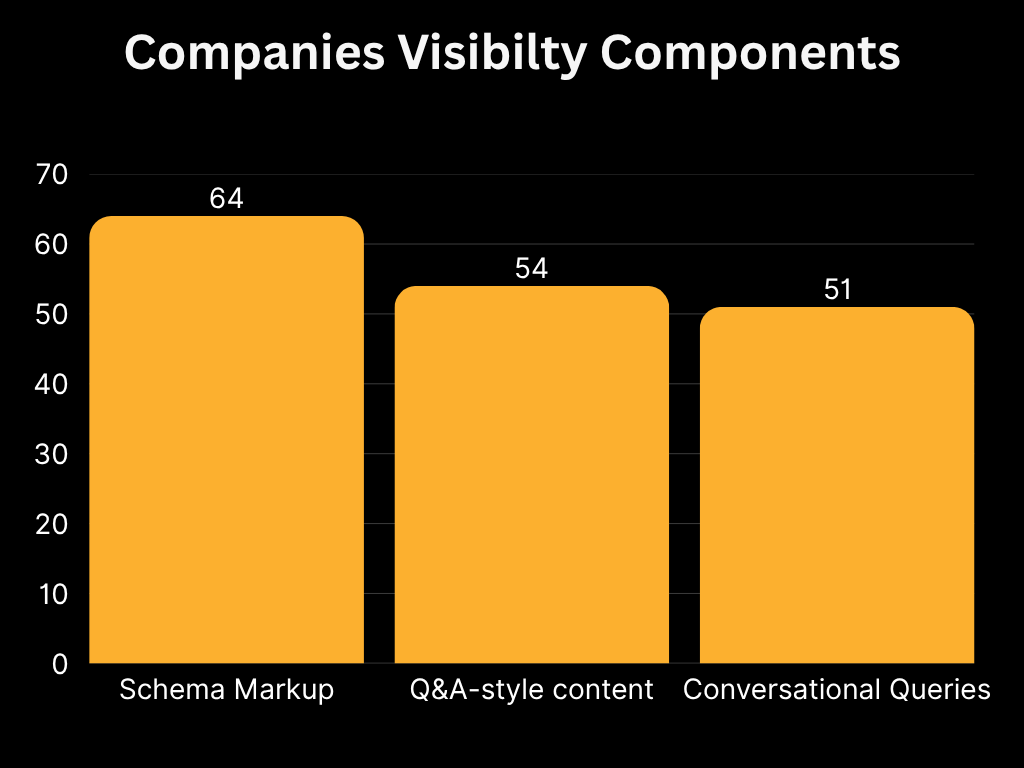
- Add schema markup, Q&A, and HowTo structures.
- Use semantic HTML, meta descriptions, and ARIA tags.
- Include charts and comparison tables with proper alt text and captions to improve content quality.
Microcontent & Snippetable Units
Because AI answers extract short passages or featured snippets, design microcontent:
- Fact cards (3–4 sentence authoritative summaries)
- FAQs with concise, valuable content
- Comparison tables and definition glossaries
These modular units make your brand AI-citable and improve SEO performance.
Performance & Freshness
AI models favor fast, high-quality, updated pages:
- Refresh data frequently using analytics tools
- Monitor page speed and SEO metrics
- Maintain consistency between AI and human-readable content writing
Tactical Playbook for B2B CMOs
Here’s how a midsize B2B CMO can activate SEO + GEO without an all-or-nothing bet:
| Objective | Tactic | Metrics |
|---|---|---|
| Establish baseline authority | Perform content audit; improve structured data, internal links, and content quality | Domain authority, SEO performance |
| Generate AI-citable content | Create “pillar + fact card + FAQ” sets | AI citations, AI referral traffic |
| Monitor AI visibility | Use synthetic queries in AI tools like Gemini or ChatGPT | Citation frequency |
| Feature in AI discovery journeys | Publish blog posts, whitepapers, and data-led insights | Leads, organic traffic |
| Protect commercial-intent queries | Focus on technical SEO and transactional keywords | CTR, conversions |
| Iterate via test & learn | Compare structured vs. traditional content | Lead conversion uplift |
Why CMOs Need an SEO + GEO Hybrid Strategy
For B2B marketers, the core purpose remains the same — visibility and trust.
SEO gives you authority and trust, enabling you to generate valuable content ideas . GEO extends that authority into the AI search world where your next buyer is already asking complex, contextual questions.
At TRYSEO, we see it this way:
1. SEO = The Baseline of Credibility
Before anyone shortlists your product, they’ll still Google you. Whether it’s a procurement manager validating a vendor or a CTO researching integration options, Google visibility remains a trust signal.
2. GEO = The Growth Amplifier
Your audience is also asking those same questions to AI platforms ChatGPT, Gemini, Perplexity, which surface structured, helpful content rather than link farms or keyword-heavy text.
That’s where TRYSEO’s GEO KPI Framework helps by aligning SEO efforts, structured data, and AI tools for visibility in AI search results.
3. Hybrid = Defensible ROI
Growth now depends on balancing SEO’s credibility with GEO’s AI visibility — one powers the other.
- A stable search ranking base keeps your funnel full.
- Dynamic AI visibility brings high-intent leads.
Together, they ensure digital marketing strategy resilience.
Key Takeaways
- SEO is not obsolete; it remains vital for discoverability, domain authority, and trust in digital marketing.
- Citation visibility is the new battleground.
- Invest in structured data, microcontent, and content quality.
- Track AI-driven search metrics and SEO performance using analytics tools.
- Continue optimizing content writing for both AI models and human readers.
Conclusion: The Future of B2B Search Belongs to the Integrators
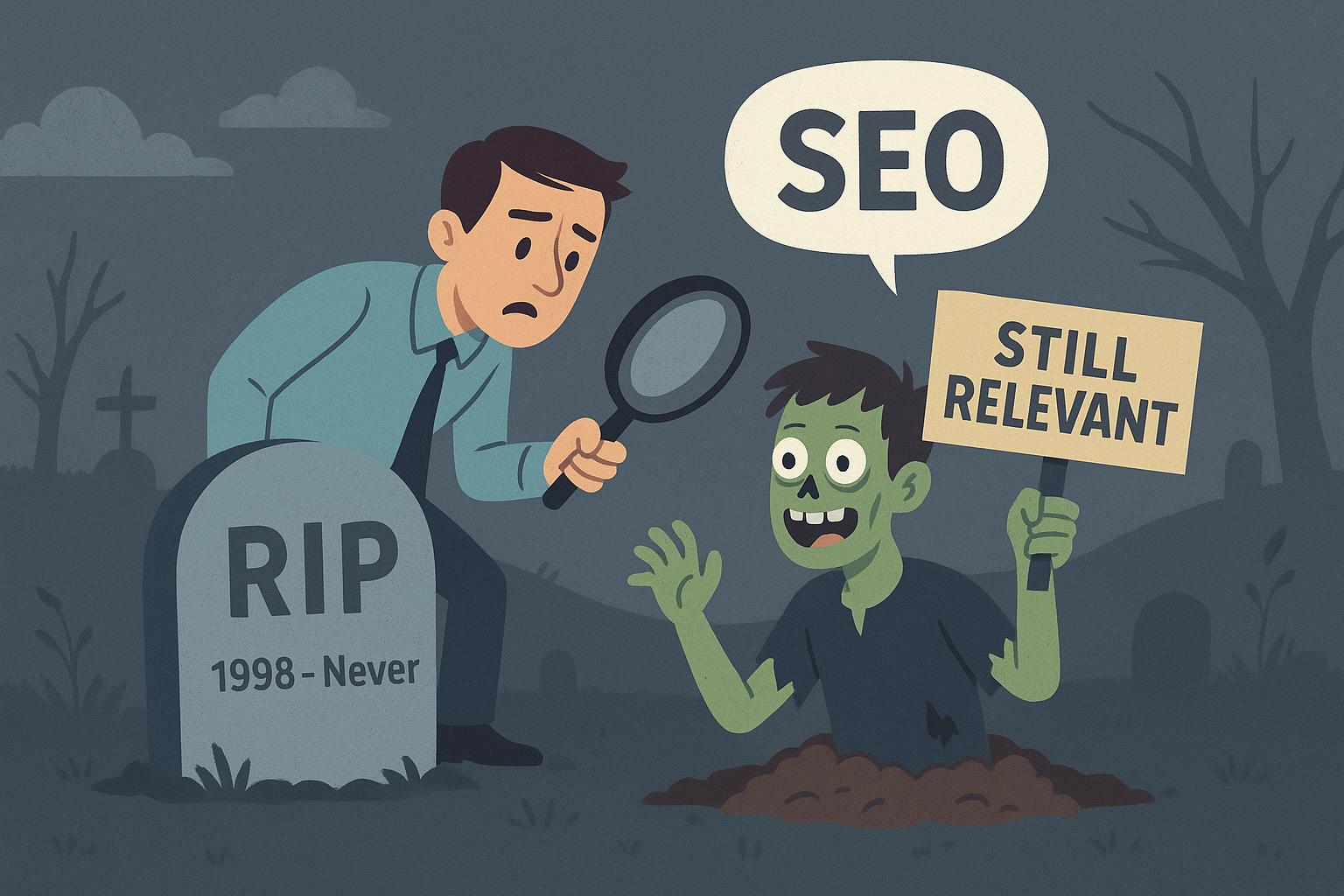
SEO is not dead — it has evolved, dispelling the notion that SEO is dead.
AI search hasn’t replaced SEO — it’s expanded it into answer-based ecosystems where precision and authority matter most. This has expanded the opportunity for content creators and digital marketers to connect with their target audience through relevant content and valuable insights.
SEO still builds your credibility baseline — the trust signals that both Google and AI engines rely on. GEO extends that reach — ensuring your insights, data, and thought leadership appear, which helps you to create content that resonates. in AI-generated answers and featured snippets, where decision-makers seek answers directly.
At TRYSEO, we call this the SEO + GEO Continuum:
- SEO anchors your brand in traditional search engines.
- GEO amplifies it in AI-driven discovery.
Together, SEO and GEO build durable visibility — from first-page rankings to AI answers your buyers actually read.
Would you also like to optimize your company for AI and become visible there?
Find out more about our services!
FAQs
Can I pause SEO and focus entirely on GEO?
No — GEO depends on your SEO foundation, which every digital marketer must understand . AI engines rely on authority signals like backlinks and domain trust. Without them, your content won’t be cited.
How do I know if my content is being cited by AI engines?
Use GEO monitoring tools (e.g., BrightEdge Copilot, MarketMuse AI) or manual prompts in ChatGPT, Gemini, and Perplexity. Track brand mentions and linked citations.
Does GEO replace keyword research?
Not exactly. GEO shifts focus from keywords to entities and topics — optimizing for semantic depth, not just search volume.
Which content performs best in AI search?
Technical, structured, and data-backed assets like whitepapers, FAQs, and case studies — anything that provides concise, verifiable facts.
How often should B2B marketers update their content for AI visibility?
At least quarterly for fast-moving tech sectors. AI models prioritize freshness and recency tags when selecting citations.
References
Allen, J. (2025). "How to get cited by AI: SEO insights from 8,000 AI citations." Search Engine Land: https://searchengineland.com/how-to-get-cited-by-ai-seo-insights-from-8000-ai-citations-455284
Allison, K. (2025). "Bridging the Trust Gap: B2B Tech Buying in the Age of AI." Trust Radius: https://solutions.trustradius.com/vendor-blog/bridging-the-trust-gap-b2b-tech-buying-in-the-age-of-ai/?utm_source=live-event&utm_medium=event_handout&utm_campaign=2025_04-trustradiusreport-bostondinner&utm_term=v
Bhagat, V.; Jacobs, S. (2024). " The Year of the Brand Crisis." Trust Radius: https://go.trustradius.com/rs/827-FOI-687/images/2024%20B2B%20Buying%20Disconnect%20Year%20of%20the%20Brand%20Crisis.pdf
Bradley, S.; Ashley, S.; Park, Y. (2024). "Build consumer confidence to boost your bottom line." Think with Google: https://business.google.com/us/think/consumer-insights/build-confident-consumers-to-improve-metrics/
Fishkin, R. (2024). "2024 Zero-Click Search Study: For every 1,000 EU Google Searches, only 374 clicks go to the Open Web. In the US, it’s 360." SparkToro: https://sparktoro.com/blog/2024-zero-click-search-study-for-every-1000-us-google-searches-only-374-clicks-go-to-the-open-web-in-the-eu-its-360/
Goodwin, D. (2025). "New data: Google AI Overviews are hurting click-through rates." Search Engine Land: https://searchengineland.com/google-ai-overviews-hurt-click-through-rates-454428
Gamboni, K. (2024). "B2B Buying Disconnect Report: The Year of the Brand Crisis." Trust Radius: https://solutions.trustradius.com/vendor-blog/2024-b2b-buying-disconnect-the-year-of-the-brand-crisis/
Kaltofen, H. (2025). "How to measure success in GEO – What KPIs should we focus on? GEO." TRYSEO: https://www.tryseo.de/en/geo-en/kpi/
Kaltofen, H. (2024). "Explosive growth (2300% year-over-year) of organic traffic and qualified B2B leads through strategic SEO." TRYSEO: https://www.tryseo.de/en/project/explosive-growth-2300-year-over-year-of-organic-traffic-and-qualified-b2b-leads-through-strategic-seo/#:~:text=targeted%20landing%20pages-,The%20results,traffic%20and%20qualified%20lead%20generation
Liu, N. F.; Zhang, T.; Liang, P. (2023). "Evaluating Verifiability in Generative Search Engines." arXiv: https://arxiv.org/abs/2304.09848
Linehan, L.; Guan, X. (2025). "Only 12% of AI Cited URLs Rank in Google’s Top 10 for the Original Prompt." ahrefs blog: https://ahrefs.com/blog/ai-search-overlap/
Moran, K.; Rosala M.; Brown J. (2025). "How AI Is Changing Search Behaviors." NN/g: https://www.nngroup.com/articles/ai-changing-search-behaviors/
Toole, L. (2024). "Research Study - The Impact of Google's Search Generative Experience on organic rankings." Authoritas: https://www.authoritas.com/blog/research-study-the-impact-of-googles-search-generative-experience-on-rankings
Sevilla, G. (2025). "Marketers bet on AI, but SEO still drives results." EMARKETERS: https://www.emarketer.com/content/marketers-bet-on-ai--seo-still-drives-results
