


Summary:
- Traditional SEO aims for clicks; ChatGPT SEO focuses on becoming a cited authority in AI-generated answers.
- Brand authority, unique data, and external mentions are more important than keyword density.
- Visibility in AI tools can be measured through brand mentions, share of voice, and traffic from AI-driven queries.
- Adapting to GEO can give your B2B company a crucial advantage, making you a top recommendation in a crowded market.
- Strengthen key pages, publish relevant technical content, optimize for Bing, and build external authority.
ChatGPT SEO is the process of optimizing your website and online presence so your company appears more frequently in ChatGPT responses.
In this article, we'll explore why ChatGPT SEO plays a crucial role for B2B businesses, and what steps you can take to make your website visible in conversational search.
Do you also want to optimize your company for ChatGPT?

Learn more about our services!
Why is ChatGPT no longer optional?
ChatGPT, now attracting over 400 million weekly active users (Rooney, 2025). It consistently ranks among the most-visited websites worldwide (Rooney, 2025; SimilarWeb, 2025). It marks a paradigm shift in how search engines operate and how users discover, evaluate, and choose providers.
The chart below, from SimilarWeb, illustrates the rankings of the most visited websites globally. According to Similarweb, ChatGPT is already in 5th place with 4 billion visits (SimilarWeb, 2025). It highlights how conversational AI has become mainstream, competing directly with Google, YouTube, and Facebook.
For B2B companies, this demonstrates that ChatGPT is no longer optional; it is vital for visibility.
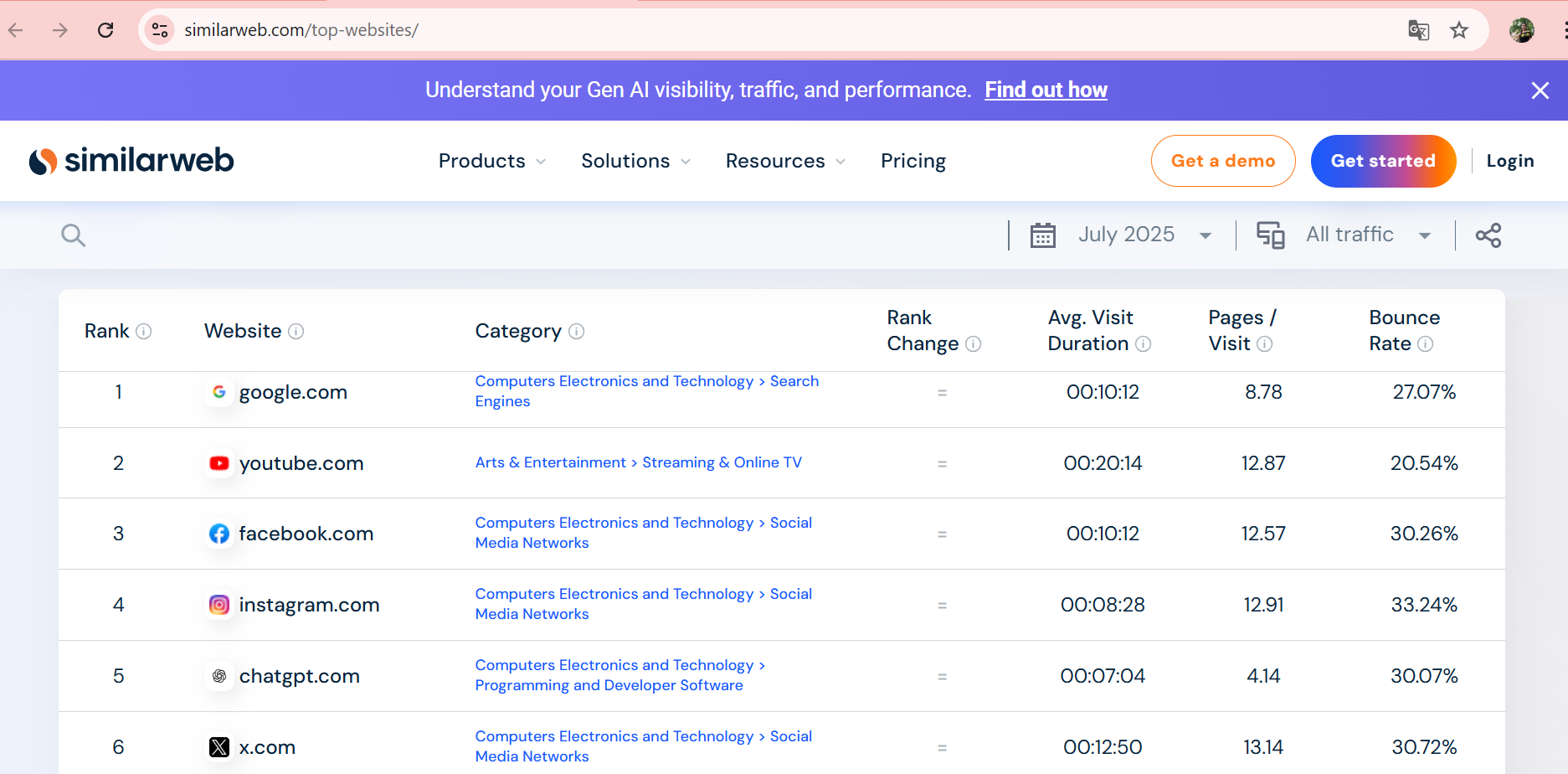
Google has long focused on ranked lists of links. But conversational AI delivers a single, contextualized response, often backed by brand mentions and cited sources. This raises a critical question for marketers: How do you make sure your company is one that ChatGPT chooses to recommend? This is precisely where ChatGPT SEO comes in.
You can read this article by Steven Wolfram on how ChatGPT works.
What is the difference between ChatGPT SEO and Traditional SEO?
Traditional SEO focuses on a company's visibility in Search Engine Results Pages (SERPs), while ChatGPT SEO aims for your brand to be cited or recommended directly in AI-generated answers.
Traditional search engines rely on indexing pages, analyzing site speed, and ranking results based on technical optimization and keyword relevance. Visibility is achieved through high rankings in SERPs, where users choose from a list of clickable links.
Conversational AI tools like ChatGPT instead deliver a single, contextualized response, often enriched with cited sources and brand mentions. This changes the role of SEO: instead of competing for clicks, B2B companies must compete for citations and authority within AI-generated answers.
This is where ChatGPT SEO, which is a part of Generative Engine Optimization (GEO), comes in. GEO is about creating content that AI can easily extract, cite, and present as a trusted recommendation (Bailyn, 2025; Tepper, 2025).
Here is a short comparison table between traditional SEO & ChatGPT SEO:
| Category | Traditional SEO | ChatGPT SEO (GEO) |
|---|---|---|
| Primary goal | Optimizes for ranking and CTR in SERPs | Optimizes for AI recommendations and citations |
| Core factors | Relies on technical optimization and keyword density | Relies on brand authority, unique data, and high-quality external mentions |
| Content Relevance | Based on keyword-rich content and high-volume search terms | Based on matching natural language queries and understanding search intent in a conversational context |
| Success metrics | Keyword rankings, organic traffic, and conversions from traditional search engines | Citations in AI answers, brand share of voice in conversational search, and traffic from AI-driven queries |
In a B2B context, this difference can be critical. A company that fails to adapt may remain invisible. While a competitor that invests in ChatGPT SEO could become the featured recommendation for decision-makers. In fact, Shane Tepper reports that traffic from LLMs is worth 4.4 times more than traditional organic traffic, underscoring the importance of this new channel (Tepper, 2025).

What are the main factors of ChatGPT SEO?
To be cited by AI, your brand must be viewed as an authority. According to First Page Sage's analysis of generative search engine optimization (Bailyn, 2025), AI models evaluate factors such as credibility, industry recognition, and social proof when determining which brands to recommend.
The following chart shows the weighting of the main factors that the ChatGPT algorithm considers when selecting a brand to mention.
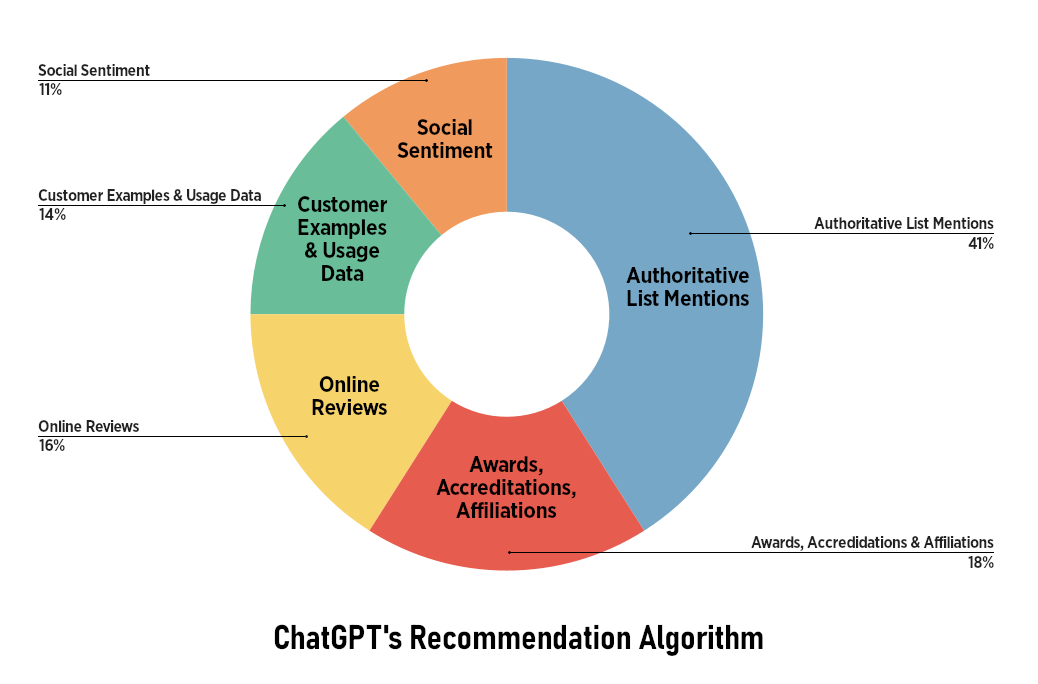
Source: Generative Engine Optimization (GEO): Explanation & Algorithm Breakdown (Bailyn, 2025)
The factors that influence your brand visibility can be grouped into three categories:
1. External Authority and Credibility
The most powerful factor for the algorithm is your reputation. This is the equivalent of E-E-A-T (Experience, Expertise, Authority and Trustworthiness). EEAT, a ranking factor in Google search, now influences AI search as well.
Mentions in authoritative lists, awards, or accreditations are the third-party validation that AI values most.
As Liz Reid, VP of Google, made this clear;
“People want to hear from people. They’re not yet ready to delegate all their fashion advice just to a AI model. It is not about the accuracy of the data; it’s what makes us human. People feel special to hear from somebody they connect to. They can relate to, their unique take on something.”
For example:
If a cybersecurity company is regularly featured in “Top Cybersecurity Tools” lists by trusted publications and cited by industry experts, AI platforms are more likely to reference it in relevant answers.
2. Social and Customer Validation
The perception of your brand in the market is a crucial factor. Online reviews, customer testimonials and social sentiment reinforce trust and contextual relevance.
For example:
A skincare brand with thousands of positive reviews on Google and frequent recommendations on social media platforms is more likely to be viewed as trustworthy by both consumers and AI search.
3. Content Optimization
ChatGPT prefers informative, credible, and high-quality content. Using specific and direct answers to questions increases the chances of getting cited in AI responses (Bailyn, 2025; Montti, 2025).
Cut the fluff as ChatGPT ignores long sentences and prefers clarity.
For example;
What is SEO?
SEO has changed dramatically over the years. Businesses are constantly adapting to algorithm updates and changing consumer behavior. In today’s competitive digital landscape…
Better direct answer:
What is SEO?
Search engine optimization (SEO) is the process of improving a website’s visibility in search engine results to attract more organic traffic.
Moreover, for AI to find and extract your information, your website must be prepared. Using schema markup to structure your data and make your website architecture clear.
Read our case study on how TRYSEO drives massive organic traffic by optimizing the content.
How to Optimize Your B2B Site for ChatGPT SEO?
You can optimize your site for ChatGPT SEO by publishing authoritative, well-structured, and trustworthy content that earns brand mentions, backlinks, and AI citations.
Once you understand the key factors influencing AI recommendations, it is time to apply concrete techniques to optimize your site for ChatGPT.
1. Optimize Key Pages
Each page on your website (homepage, product pages, services, case studies) should be optimized for visibility in ChatGPT (Bailyn, 2025). AI systems prefer pages that clearly explain products, answer questions directly, and provide trustworthy evidence.
According to Green (2025) experiment, the Q&A format showed the strongest semantic relevance across all search queries. Therefore, it is best for GEO.
Similarly, structured content using headings and lists performed nearly as well as Q&A formats for non-question-based queries.
For example, if you are a software company, optimize pages with FAQs like: "How does your solution compare to SAP?" (Montti, 2025). This format aligns more closely with how users interact with AI search tools.
You can optimize your pages around these strategies to achieve brand visibility.
- Highlight unique data such as industry benchmarks or proprietary studies. AI tools are more likely to cite this type of evidence (Bailyn, 2025).
- Add trust signals like awards, certifications, and partnerships to enhance brand credibility and increase the chance of being referenced (Bailyn, 2025).
- Add Clear Product Positioning: AI systems prioritize pages that explain products and services in precise, contextual language. This improves relevance for conversational searches and AI-generated recommendations.
- Ensure a clean website structure with proper headings and internal linking to improve visibility and extractability for AI-driven platforms (Google, n.d.).
Example:
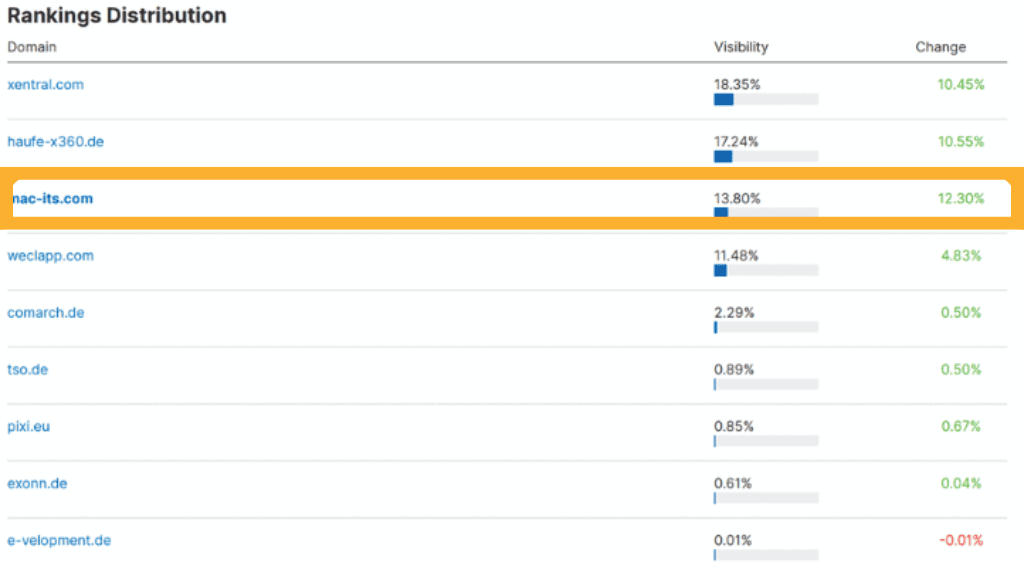
Mac-IT Solutions was struggling with low brand visibility.
At TRYSEO, we use the informational search queries and implement FAQ, HowTo, and Product markups to increase visibility in AI responses. We improve brand signals through case studies and expert profiles.
As a result, the growth rate increased by 12%, with 210 unique domain citations.
2. Content Marketing & Blog Articles
Content marketing plays a crucial role in ChatGPT SEO by prioritizing high-quality, long-form blog posts that provide actionable answers (Raebricht, 2025).
Otterly.AI analyzed more than a million citations across AI platforms and found that ChatGPT prefers "reference-grade content". This means that to get cited in AI responses, you need proper quotable content with clear references (Peham 2026).
You can format your content for ChatGPT SEO around these actions;
- Target Conversational Search Intent: Users now ask AI tools complete questions rather than typing short keywords.
- FAQs. Directly answer the exact questions your target audience is asking.
- Technical comparisons. For example, "SAP vs Oracle ERP".
- Publish Long-Form Educational Content: Comprehensive articles are more likely to be referenced by AI systems because they provide detailed context and direct answers.
- Step-by-step guides. Structured articles that provide detailed explanations. For example:“How to migrate enterprise data to the cloud.”
- Research Reports and Benchmark Studies: AI systems frequently cite original research because it offers unique value.
For a step-by-step approach, see TRYSEO's guide on Writing Blog Posts in the Age of LLMs (Raebricht, 2025).
3. Strengthen External Authority
External authority is one of the most crucial ranking and citation signals for both traditional SEO and ChatGPT SEO (Bailyn, 2025).
- Backlinks through guest articles. High-quality backlinks remain one of the most critical ranking signals for Google, and as a result, a sign of authority (Bailyn, 2025; Dean, 2025).
- Brand mentions. Citations in industry news, conference reports, or association websites are frequently extracted by AI tools (Bailyn, 2025).
- Partnerships and collaborations. Co-authoring, whitepapers, collaborating with universities, or sponsoring studies build trust signals (Bailyn, 2025).
- KPIs to measure this success are focused on key signals that AI values (Kaltofen, 2025):
- Number of backlinks (especially those from high-authority sources)
- Mentions in the media and on social media
- Mentions in the LLM-generated results
Partnerships and collaborations can strengthen these signals further. Co-authoring whitepapers, sponsoring industry research, or collaborating with universities creates strong trust and credibility indicators.
By strengthening external authority, companies move from being one more result to becoming a recognized industry voice in both search results and AI-driven answers (Tepper, 2025).
Example:
I conducted a guest experiment on YouTube videos in partnership with Otterly.AI.
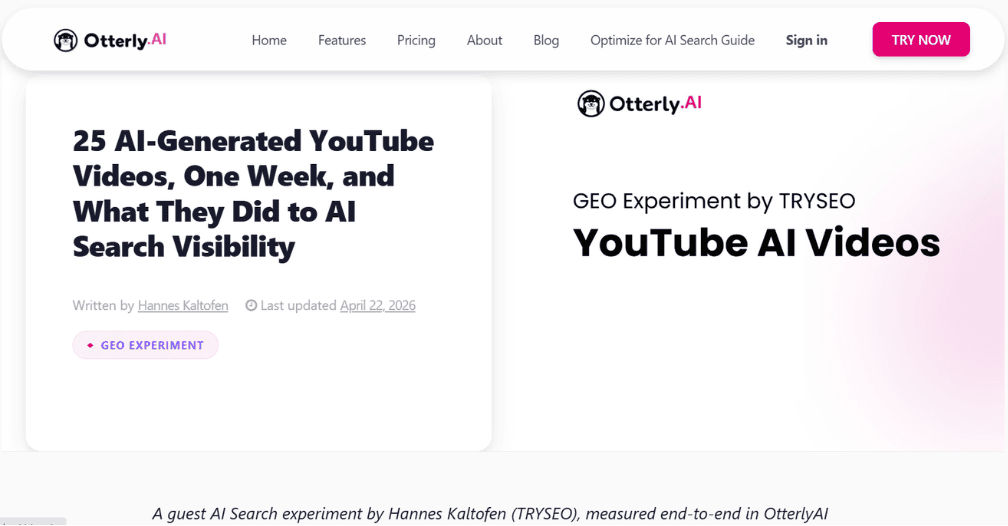
You can read more on how to build brand trust in our latest article on off-page optimization.
4. Bing Optimization
Given the foundational partnership between OpenAI and Microsoft, optimizing for the Bing ecosystem is essential for ChatGPT SEO.
The connection between the two platforms means that a strong presence in Bing's index directly enhances your brand's visibility in conversational AI.
- Register with Bing Webmaster Tools. To submit updated sitemaps and monitor indexing (Bing, n.d.).
- Structured data implementation. Use schema markup to help Bing better understand your pages. For example, product schema, FAQs schema, and how-to schema. (Bing, n.d.)
- Leverage Bing's features by optimizing headings and page titles as these are crucial for a website's overall clarity and relevance (Bing, n.d.).
TRYSEOs GEO methodology prioritizes Bing indexing because Microsoft’s ecosystem heavily influences AI retrieval systems like ChatGPT.
5. Leverage Reddit and Community Signals
AI engines increasingly rely on Reddit, Quora, forums, and community discussions because they are viewed as authentic human-generated signals.
If people actively discuss your brand, product category, or expertise on Reddit, AI tools are more likely to surface your company in generated answers.
According to Peham (2025), Reddit gains more than 50% citations compared to the brands' domains. Moreover, according to the YouTube citation study 2026, Reddit's share in citations of all social media platforms is 46%.
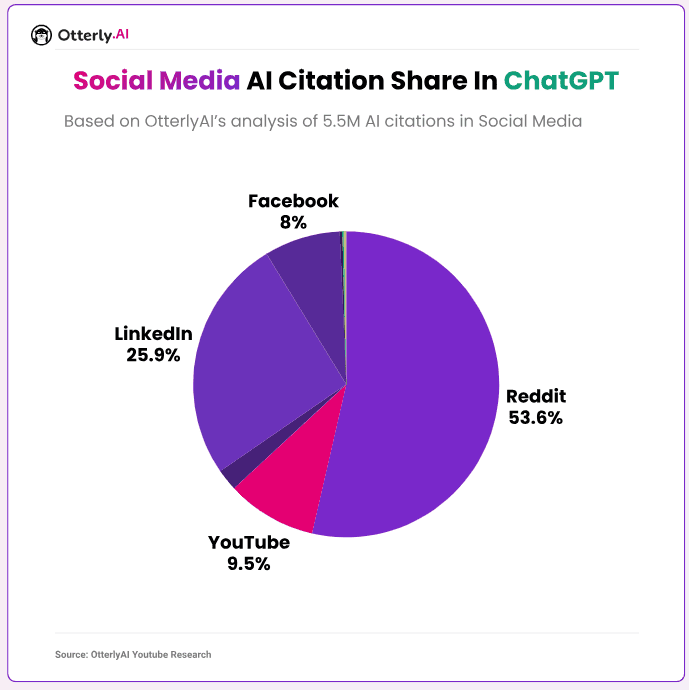
LLMs frequently use Reddit discussions to:
- Identify trending topics
- Understand user sentiment
- Discover product comparisons
- Extract real-world recommendations
- Validate authenticity
This means community discussion has become an indirect ranking and citation signal for AI visibility.
Even though using Reddit for visibility and ChatGPT SEO is easier said than done, it can be effectively implemented. You can use the following strategies to increase visibility in AI responses;
- Monitor Relevant Subreddits: Track conversations related to your industry, competitors, customer pain point and product comparisons.
Example Subreddits include r/SaaS, r/SEO, r/marketing. - Participate Authentically: Do not spam links. Instead, answer questions, share expertise, provide frameworks, and explain technical concepts. AI systems value authentic engagement signals.
- Identify Recurring Questions: Questions repeatedly discussed on Reddit should become content opportunities.
Example: If users repeatedly ask: “What ERP tools work best for mid-sized manufacturers?” Create: A comparison article, FAQ section, or benchmark study. This aligns your content directly with real conversational demand. - Encourage Organic Brand Discussions: The strongest signal is when people discuss your brand voluntarily.
For this, publish original research worth sharing, release free tools/templates, sponsor community events, and engage industry experts. The more your brand appears in authentic discussions, the more likely AI engines are to recognize it as a credible authority source.
Do you also want to optimize your company for ChatGPT?
Learn more about our services!
What are the Tools to Track and Improve your ChatGPT SEO?
One of the biggest concerns for marketers and CMOs is that conversational SEO can be time consuming. Unlike traditional SEO, where dashboards like Google Analytics provide clear data, here we often need to identify visibility through indirect signals. That's why the right AI tools and SEO platforms play an essential role in scaling and automating the process.
- Otterly.ai. The only platform specialized in ChatGPT SEO. It allows you to monitor when your company is cited in AI-generated answers, track brand mentions, and receive actionable steps to improve relevance. For example, it can identify which keywords are triggering competitor's mentions, giving you a roadmap to create content that fills those informational gaps.
- SurferSEO. A powerful platform for keyword research and content optimization. By analyzing what kind of content ranks in search results, it helps align your pages with SEO best practices and conversational search intent.
- Ahrefs and SEMrush. These are essential tools for evaluating backlinks, auditing your website's performance, and analyzing your competitors' strategies. Backlinks remain highly valuable since they reflect credibility that AI systems can recognize.
- Google Search Consoleand Bing Webmaster Tools. Even though ChatGPT integrates Bing, it is still necessary to ensure your site is well-indexed, fast, and technically sound. Submitting updated sitemaps, checking for broken links, and optimizing your website structure are actionable steps that boost visibility in both ecosystems.
When combined, these AI tools allow marketers to explore opportunities, enhance visibility, and reduce manual effort in ChatGPT SEO.
SEO Traps to Avoid in ChatGPT Optimization
Many B2B marketers rush into ChatGPT SEO without a clear plan. Avoiding some mistakes will boost your credibility and ensure AI engines consider your website a trustworthy source. The core principle here is that traditional SEO best practices are the foundation for effective AI optimization.
- Over-optimizing keywords. Keyword stuffing damages readability, frustrates users, and undermines the context extraction capabilities of AI tools like ChatGPT. This practice degrades user experience and fails to drive engagement or trust, as confirmed by research on search engines. Instead, content should prioritize clarity and relevance by using keywords naturally within a people-first approach (Google, n.d.). What is bad for traditional SEO is also bad for AI: AI models are trained on human language. Unnatural, keyword-sttuffed content is difficult for both humans and AI to understand and deem trustworthy.
- Publishing content without authority signals. Publishing content without clear relevance or authority signals (such as citations, awards, or unique data) is a significant mistake. Credibility signals -including third-party mentions and unique datasets- increasingly influence whether AI platforms surface your brand in responses, according to research from Gartner (Gartner, 2024). AI-era credibility is built on the same principles as traditional authority. AI tools are designed to cite trusted and authoritative sources, making signals like backlinks and third-party validation more important than ever.
TRYSEO Two-Layer System: How TRYSEO Implements ChatGPT SEO for B2B Companies?
This is our unique proprietary approach for building AI visibility in ChatGPT, Perplexity, Gemini, and Google AI Overviews.
Instead of treating SEO and GEO as separate tactics, we operate a dual-layer system:
Layer 1: Human Conversion Layer (Buyer Psychology Layer)
This layer is designed for real decision-makers, not algorithms. It applies sales psychology across the website to support the full B2B customer journey through to final conversion.
Step 1: Define the “Ideal Buyer Profile”
We build a structured profile of the decision-maker, pain point, buying trigger, objections, and evaluation criteria.
Output: psychological map of how buyers search and decide.
Step 2: Map Real Conversational Intent
Instead of keyword lists, we extract real buyer questions used in AI tools.
Step 3: Build Conversion-Aligned Pages
We create landing pages aligned to decision stages, comparison pages, solution pages, and proof-based case study pages.
Layer 2: AI Visibility Layer (Generative Engine Layer)
This layer ensures visibility inside ChatGPT, Perplexity, Gemini, Copilot, AI Overviews.
Step 4: Entity Positioning Strategy
We define how AI systems should understand the brand:
- What category do we belong to?
- What problems do we solve?
- Who do we compete with?
- What proof supports us?
Output: consistent “AI-readable identity”
Step 5: Citation-Ready Content
We restructure content so AI systems can easily extract and cite it:
We optimize for:
- clear definitions
- structured answers
- comparison formats
- factual statements
- evidence + examples
- original insights
Output: content that AI systems reuse in answers
Step 6: Authority Signal Distribution (Off-Page GEO Layer)
We strengthen trust signals outside the website:
- industry mentions
- Reddit & forum discussions
- niche publications
- partner citations
- digital PR
- review platforms
Output: external validation layer for LLM trust scoring
How do the Two Layers Work Together for ChatGPT SEO?
Both layers run simultaneously: Layer 1 ensures conversion (website persuades humans) while layer 2 ensures visibility (AI systems recommend the brand).
The framework is designed to turn visibility into qualified pipeline growth.
Case Study of our client Tenios: From 0% to 50% ChatGPT visibility

Tenios, one of our clients, is a mid-sized German telecommunications provider. They noticed that despite strong traditional SEO performance, they were virtually invisible in ChatGPT answers, showing only 7 % brand coverage while competitors dominated over 50% of the relevant AI-generated responses.
ChatGPT SEO Implementation:
- Content Optimization: Replaced generic marketing language with concrete data: "Over 1,200 enterprise clients achieve 99.9% network uptime" instead of "reliable service"
- Schema Implementation: Added comprehensive schema markup for better AI extraction, particularly FAQ and Product schemas
- Authority Signals: Secured authentic mentions on industry subreddits and trade publications that ChatGPT frequently references
Results within 3 months:
- ChatGPT brand coverage jumped from 0 % to over 50 %.
- Citations moved from position 10 to position 1 in AI-generated answers.
- Significant increase in qualified leads, with prospects specifically mentioning ChatGPT as their discovery source.
Using Otterly.ai, we identified which competitor prompts triggered citations and created targeted content to capture those opportunities.
Key insight: ChatGPT values concrete data and third-party validation more than traditional marketing copy.
This case proves that focused ChatGPT SEO can deliver measurable business impact in just three months and position a company as the go-to recommendation in AI-generated answers.
Do you also want to optimize your company for ChatGPT?
Learn more about our services!
How to Measure Success in ChatGPT SEO?
Success in ChatGPT SEO is not as straightforward to measure as traditional Google Analytics metrics.
However, B2B companies can define clear progress indicators by combining manual testing, AI monitoring, and business outcomes (Kaltofen, 2025).
A mid-sized engineering firm in Munich, for example, regularly ran prompts like “best engineering firms in Germany” in ChatGPT to see whether their brand appeared in AI-generated answers. Initially, only competitors were cited. After improving their site structure and publishing more GEO-optimized articles, they began to see occasional brand mentions.
TRYSEO highlights the importance of structuring content so that LLMs can easily extract and reference it (Raebricht, 2025). In parallel, the company used Otterly.ai to automatically track when and where their brand was cited in conversational answers. Research from Search Engine Journal shows that platforms such as Google AI Overviews and ChatGPT reference brands differently, underscoring the need to monitor each channel separately (Montti, 2025).
Performance measurement in three steps:
- Track prompts systematically (e.g., with Otterly)
- Analyze referral traffic from ChatGPT in Google Analytics
- Ask customers directly how they discovered the company
This combination of prompt tracking, traffic analysis, and customer feedback provides a solid picture of ChatGPT visibility and makes SEO progress measurable.
Conclusion: Preparing for the future of Search
The shift from traditional SEO to ChatGPT SEO reflects a deeper change in how users search, consume information, and make purchasing decisions (Coffee, 2025; Gartner, 2024). For B2B companies, the transition toward AI-driven platforms like ChatGPT is both a challenge and an opportunity to boost visibility and enhance credibility.
The companies that take immediate actionable steps, auditing website structure, creating quality content aligned with search intent, and monitoring brand mentions with Otterly.ai, will be the ones positioned to succeed. Over the long term, investing in a content marketing strategy, building backlinks, and continuously improving your site, will be essential to remain visible in the competitive B2B market.
In short, the future belong to businesses that combine SEO best practices with GEO (Tepper, 2025). If you act now, your brand can secure a spot in AI-generated answers, earning trust and high-quality leads in a landscape where visibility is everything.
Frequently Asked Questions (FAQs)
What is the connection between GEO and traditional SEO?
They complement each other. While traditional SEO ensures visibility in Google seach results, GEO focuses on conversational AI platforms like ChatGPT. A balanced approach covers both.
How long does it take to see results with ChatGPT SEO?
The first changes can be seen in 1-2 months, but building authority requires 6-12 months of consistent investment.
Is traffic from ChatGPT more valuable than from Google?
Yes. Although it is smaller in volume, it is usually more qualified because it comes from direct recommendations, similar to a branded search.
Do I need a GEO specialist, or can my SEO team manage it?
Your existing SEO team can adapt by learning SEO best practices for AI and focusing on content strategy. Training in AI tools, ChatGPT prompts, and keywords is recommended.
What role does content marketing play in ChatGPT SEO?
It plays a crucial role. Publishing quality content, crafting content for both users and AI, and writing blog posts aligned with search intent significantly increases the chance of earning mentions.
Do you also want to optimize your company for ChatGPT?
Learn more about our services!
References
- Bailyn, E. (2025). "Generative Engine Optimization (GEO): Explanation & Algorithm Breakdown". First Page Sage: https://firstpagesage.com/seo-blog/generative-engine-optimization-geo-explanation/
- Bing (n.d.). "Möchten Sie mehr Benutzer für Ihre Website?"
https://www.bing.com/webmasters/about?cc=de - Bing Webmaster Team. (2025). "IndexNow enables faster and more reliable updates for shopping and ads." Bing Webmaster Blog: https://blogs.bing.com/webmaster/May-2025/IndexNow-Enables-Faster-and-More-Reliable-Updates-for-Shopping-and-Ads
- Bing Webmaster Guidelines. (n.d.). „ tags – Title of the page. Write descriptive and unique titles for each page of your website. – This is the summary and description of the web page.“ Microsoft Bing: https://www.bing.com/webmasters/help/webmaster-guidelines-30fba23a
- Coffee, P. (2025). "AI Has Upended the Search Game. Marketers Are Scrambling to Catch Up". The Wall Street Journal: https://www.wsj.com/articles/ai-has-upended-the-search-game-marketers-are-scrambling-to-catch-up-84264b34
- Dean, B. (2025). "We Analyzed 11.8 Million Google Search ResultsHere’s What We Learned About SEO". BackLinko: https://backlinko.com/search-engine-ranking
- Gartner. (2024). "Gartner Predicts Search Engine Volume Will Drop 25% by 2026, Due to AI Chatbots and Other Virtual Agents". https://www.gartner.com/en/newsroom/press-releases/2024-02-19-gartner-predicts-search-engine-volume-will-drop-25-percent-by-2026-due-to-ai-chatbots-and-other-virtual-agents
- Google. (n.d.). "Creating helpful, reliable, people-first content". Google Search Central: https://developers.google.com/search/docs/fundamentals/creating-helpful-content
- Google. (n.d.). "SEO Starter Guide". Google Search Central. https://developers.google.com/search/docs/fundamentals/seo-starter-guide
- Google. (n.d.). "Understanding Core Web Vitals and Google search results". Google Search Central: https://developers.google.com/search/docs/appearance/core-web-vitals
- Kaltofen, H. (2025). "How to measure success in GEO – What KPIs should we focus on?". TRYSEO: https://www.tryseo.de/en/geo-en/kpi/
- Kaltofen, H. (2026). "25 AI-Generated YouTube Videos, One Week, and What They Did to AI Search Visibility". OtterlyAI: https://otterly.ai/blog/geo-experiment-youtube-ai-generated-videos/
- Montti, R. (2025). "Research Shows How To Optimize For Google AIO and ChatGPT". Search Engine Journal: https://www.searchenginejournal.com/research-shows-how-to-optimize-for-google-aio-and-chatgpt/554829/
- Peham, T. (2026). "The AI Citation Economy: What 1+ Million Data Points Reveal About Visibility in 2026". OtterlyAI: https://otterly.ai/blog/ai-citation-economy/
- Perez, S. (2025). "ChatGPT doubled its weekly active users in under 6 months, thanks to new releases". TechCrunch: https://techcrunch.com/2025/03/06/chatgpt-doubled-its-weekly-active-users-in-under-6-months-thanks-to-new-releases/
- Raebricht, S. (2025). "Creating content in the Age of AI - How to Create Posts for SEO & GEO". TRYSEO: https://www.tryseo.de/en/geo-en/writing-blog-posts-for-tryseo-in-the-age-of-llms/
- Rooney, K. (2025). "OpenAI tops 400 million users despite DeepSeek’s emergence". CNBC: https://www.cnbc.com/2025/02/20/openai-tops-400-million-users-despite-deepseeks-emergence.html
- SimilarWeb. (2025). "Most visited websites worldwide". https://www.similarweb.com/top-websites/
- Tepper, S.H. (2025). "The GEO White Paper: Optimizing Brand Discoverability in Models like ChatGPT, Perplexity, and Google AI Overviews (Version 3.0, August 2025)". Medium: https://medium.com/@shaneht/the-geo-white-paper-optimizing-brand-discoverability-in-models-like-chatgpt-perplexity-and-ee741613dfb3

