
Updated: 12.05.2026
Summary: SEO Content Strategy for AI Visibility
- Search Engine Optimization (SEO) now requires dual strategies. One for AI tools (GEO) to capture top-of-funnel visibility, and other using classic SEO for bottom-of-funnel purchase intent.
- A strong technical foundation remains essential for SEO, including crawlability, page speed, and site architecture. Structured keyword mapping and business-aligned content build on that foundation.
- Structured content is crucial for GEO optimization. Start with concise answers, followed by detailed explanations supported by facts, sources, and verifiable first-hand expertise that AI tools can recognize as trustworthy.
- E-E-A-T must be implemented throughout the entire website, not just in blog post, through transparent author biographies, verifiable qualifications and trust signals.
- Multi-platform visibility is required as users now search on numerous platforms (Amazon, YouTube, Pinterest, TikTok) – each with its own ranking algorithms. A consistent brand message across all platforms increases the likelihood of being considered in AI responses.
Is Your SEO Strategy Ready for AI Search?
Are you still looking for success with the same SEO methods you used a few years ago? Then it’s high time to rethink! SEO is currently experiencing one of the biggest upheavals in recent years. What worked yesterday might already be outdated today.
The search landscape has changed from appearing on Google’s first page to AI overviews and AI responses. Instead of browsing long lists of links on search engine results pages, users are increasingly served by AI overviews and featured snippets that aim to answer questions immediately. They are also turning to chatbots and Al search engines when researching purchases.
In fact, SEO now stands for much more than just “Search Engine Optimization” in the traditional sense.
What does that mean for you? You need a completely new approach that takes these changing user habits into account. If you act now, you will secure a valuable advantage over the competition.
And you can find out how you can do this in this article!
Would you also like to optimize your company website for AI and become visible there?
Find out more about our services!
What are the Two Major Strategic Changes in SEO?
There are two fundamental changes you need to consider for your SEO strategy in 2026:
- SEO is no longer Google-exclusive: you need to adapt to multiple search environments, including AI tools. The focus is no longer exclusively on Google rankings, but on being visible in different search platforms and AI assistants. This requires a broader presence strategy.
- Companies now need dual SEO strategies: You need one approach for top-of-funnel traffic and a separate one for bottom-of-funnel traffic. Why? Information searches are increasingly being handled directly in AI interfaces. Users visit your website less for general information, but with more specific purchase intentions. This shifts your traffic patterns considerably.
These changes require new strategic thinking. Instead of simply creating content and hoping for backlinks, you need to optimize for AI tools (GEO).
The rise of AI-driven search engines, voice assistants, and zero-click search has also introduced a new dimension to optimization: Answer Engine Optimization (AEO). Now the question is, does AEO replace SEO?
The answer is no. Not now or maybe never. Instead, it only complements the SEO.
How Answer Engine Optimization Complements SEO?
Rather than replacing SEO, AEO complements it by extending optimization into AI-generated answers, voice search, and zero-click experiences.
While SEO helps content rank and attract traffic, AEO improves the chances of that same content being extracted, cited, and surfaced as a direct answer.
Consider it like a cake with a cream topping. SEO is the base that gives your content structure, visibility, and helps it get discovered on search engines like Google. While AEO is the cream topping. It refines that content so it can be picked up, summarized, and served directly as an answer by AI tools like ChatGPT or Microsoft Copilot.
Thus, both approaches are increasingly interdependent.
How do You Define SEO Success for Your Company?
SEO success can look completely different for different companies:
- For a B2B company with long sales cycles, success means generating more qualified leads
- For an e-commerce store, the focus is to directly increasing sales beyond organic traffic and paid ads
- For a SaaS company, the number of test registrations could be decisive
- For a local service provider, calls and inquiries may count
The important thing is to define your SEO KPIs (key performance indicators) based on your overarching business goals. This could mean that you don’t just look at rankings and traffic, but above all at conversions, engagement, or other business-critical metrics.
Also pay attention to industry-specific features. Even similar websites in the same industry can require completely different strategies.
Why Should Generative Engine Optimization Be Part of Basic SEO Strategy?
GEO should be part of a modern SEO because users increasingly discover information through AI-generated answers, not just traditional search engine results.
Optimizing for generative engines helps improve visibility, citation potential, and top-of-funnel presence in these emerging search engine algorithms.
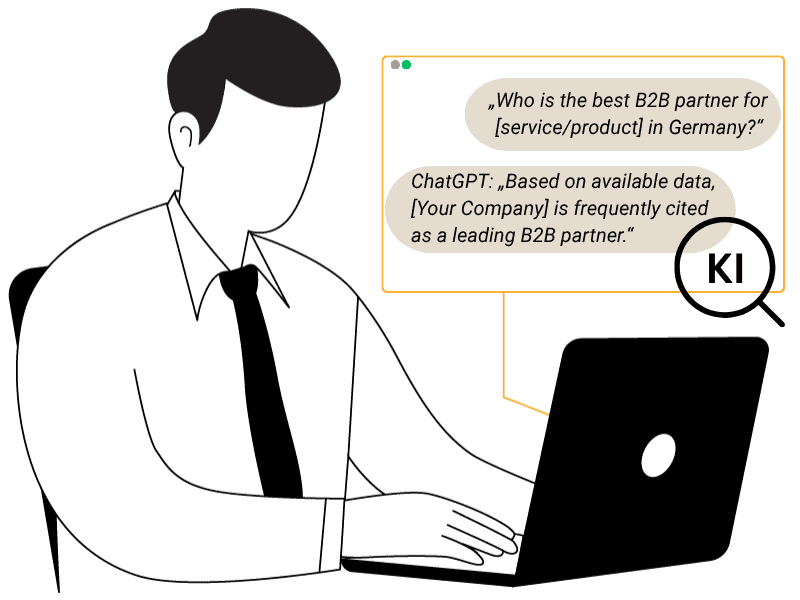
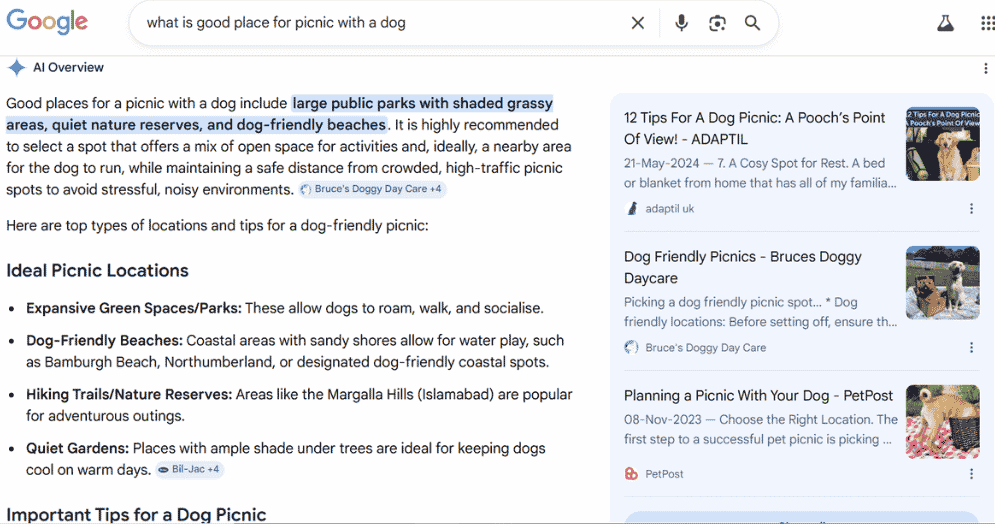
GEO refers to the techniques and strategies you use to appear prominently in ChatGPT and Google’s AI Overviews. Unlike SEO, GEO focuses on how your content is interpreted, processed, and, most importantly, cited as a source by AI systems.
Why is this so important? The figures speak for themselves. Google’s AI Overviews has reduced the clicks by 34% (Law 2025), and according to a survey, ChatGPT search queries cross 37 million (Fishkin 2025).
How to Implement GEO?
To build an effective Generative Engine Optimization (GEO) strategy, several elements are essential:
- Structured content: Organize information with clear headings and logical flow so AI systems can easily interpret it
- Precise, context-rich answers: Provide direct and concise responses to specific queries
- Unique insights: Offer original perspectives or data that go beyond widely available information
- E-E-A-T signals: Demonstrate experience, expertise, authority, and trustworthiness—factors that remain critical for both search engines and AI systems
- Semantic depth: Cover topics comprehensively, including related questions and subtopics
Optimizing for AI requires a shift in mindset. Instead of focusing on keyword density, prioritize topical relevance, factual accuracy, information gain, and clarity. Content that is trustworthy, well-structured, and genuinely informative is far more likely to be surfaced—and cited—in both search results and AI-generated answers.
What Makes a Successful SEO Strategy in the AI Era?
A successful strategy today goes beyond traditional on page SEO optimization. It combines SEO, structured keyword mapping, high-quality content, and authoritative link building. While also adapting to how AI systems interpret and surface information.
To remain visible, your strategy must address both search engine rankings and AI-driven answer generation.
Core SEO Foundations
Before adapting to AI, a strong foundation is essential.
Keyword Mapping: The Structured Approach for Landing Pages
Keyword mapping involves assigning specific keywords to specific URLs.
Each page should target a distinct primary keyword to avoid overlap and improve relevance, especially when managing multiple pages around closely related topics. This ensures a clear content structure, helps target different audience segments across the funnel, and prevents keyword cannibalization.
A well-planned keyword map should be based on search volume, competition, user intent, search intent and business relevance. For example, instead of multiple overlapping pages on “SEO strategy,” you can create targeted pages such as:
- /seo-content-strategy-basics
- /seo-strategy-b2b
- /seo-strategy-2026
This structured approach improves clarity for improves clarity for users and helps search engines understand page relevance.
You can also use our template (Just make a copy of the document, then you can edit it).
Technical SEO as a Foundation
Without strong SEO, even the best content will struggle to rank. Your site must be easily crawlable, fast, and logically structured.
Key elements include:
- Crawlability and tracking indexed pages: Ensure web crawlers can access, crawl, and index related pages so they appear in Google search results.
- Clear website architecture: Regular technical audits should include checking broken links as part of ongoing SEO activities that support long-term site health.
- Internal linking and pagination
- Proper heading structures and optimized meta description tags
- Increased website speed
- Use of structured data (Schema markup) to help search engines understand content
- A scalable content management system (CMS) can simplify optimization, publishing workflows, and structured content updates.
Link Building (Inbound Links)
High-quality, relevant backlinks remain a strong ranking signal. Focus on quality over quantity through strategies such as guest posting, digital PR, expert contributions, and original research.
The goal is to build authority and credibility—not just links. Strong backlink profiles from reputable other websites can improve trust signals. While growing domain authority remains an important long-term objective.
How to Optimize SEO Strategy for AI Search Engines?
Here are the most important practical steps:
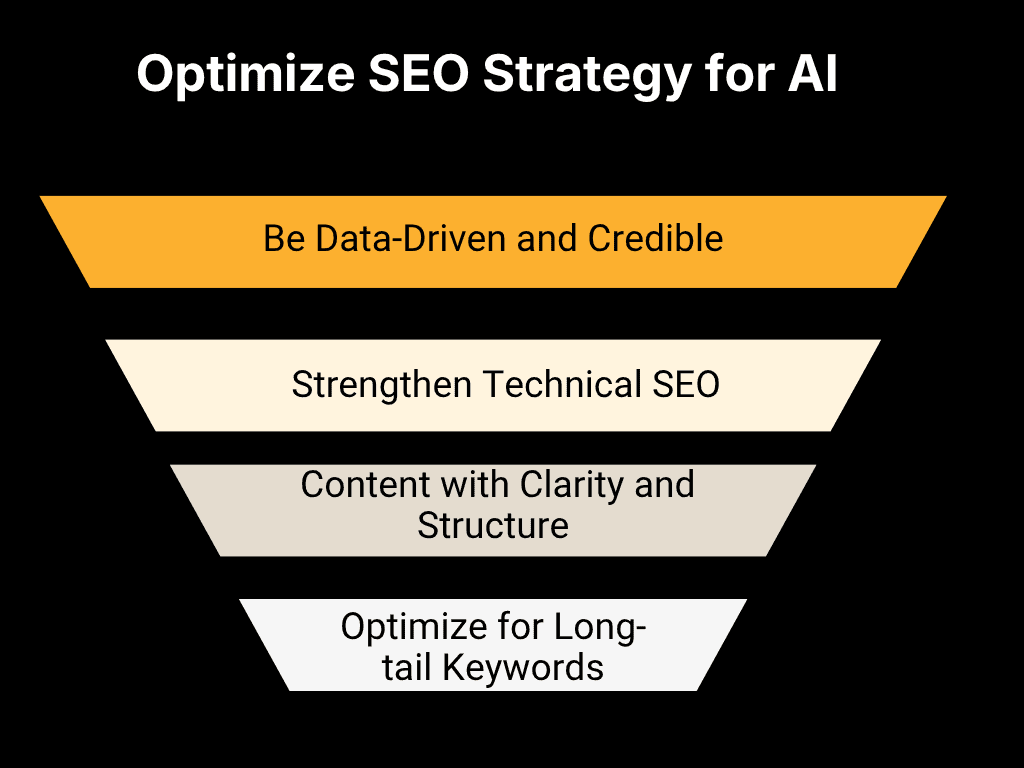
1. Optimize for Long tail Keywords for AI Search Engines
Long-tail keywords are longer, more specific search queries that reflect clear user search intent. In AI-driven search and GEO, they are especially important because users increasingly ask full, conversational questions instead of short keyword phrases.
These keywords are usually lower in competition but higher in conversion potential because they match precise needs.
Examples:
- Instead of: “SEO strategy”
→ Long-tail: “what is the best SEO strategy for small businesses in 2026” - Instead of: “air fryer”
→ Long-tail: “which air fryer is best for a family of four with healthy cooking options”
How to adapt:
- Target low-volume but high-intent keywords
- Use conversational queries from sources like Google’s search bar “People Also Ask” and Reddit. Reddit alone has more than 400k organic search visits/month (Rus 2026)
- Include variations and semantic keywords
- Add FAQ sections to capture multiple queries
2. Create Content with Clarity and Structure
AI favors well-structured, easy-to-scan content with clear summaries.
How to adapt:
- Add key takeaways at the top
- Use clear headings (H1–H3)
- Include tables of contents and concise summaries
- Refresh existing content using tools like ChatGPT
3. Strengthen Technical SEO
A solid technical foundation ensures content is accessible and interpretable by AI systems.
How to adapt:
- Implement schema markup (FAQs, article, product, etc.)
- Ensure web crawlability, fast load speed, and clean architecture
- Make content visible in HTML (not just JavaScript)
- Explore emerging practices like image alt text

4. Be Data-Driven and Credible
AI prioritizes authoritative, original, and trustworthy content.
How to adapt:
- Use proprietary data, case studies, or surveys
- Cite credible sources and link to original data
- Focus on unique insights to stand out
How to Optimize for AI Tools and Voice Assistants?
Optimizing for AI tools and voice assistants requires a slightly adapted way of thinking compared to traditional SEO.
For AI tools such as ChatGPT and Bard:
- Pay attention to the “citability” of your content. AI tools prefer sources that are easy to cite. Make sure your key findings and information are in clear, stand-alone paragraphs or bulleted lists.
- Use “entity-based content”. AI models work with entities (people, places, concepts, products). Incorporate relevant entities clearly into your content and make connections between them. Define important terms clearly and unambiguously.
- Pay attention to factual accuracy. AI tools are getting better and better at recognizing incorrect or contradictory information. Check your facts carefully and link to trustworthy primary sources.
For voice assistants such as Alexa or Google Assistant:
- Optimize for natural language questions. Voice assistants primarily process questions in natural language. Integrate complete sets of questions into your headings and content structure.
- Focus on local intentions. Voice searches are often local (“pizzeria near me”). Make sure your local business information is up-to-date and consistent.
- Consider context and conversation. Modern voice assistants can understand several questions in context. Structure your content so that it responds to follow-up questions and establishes connections.
- Keep answers compact. Short, concise answers are preferred for voice searches. Formulate your most important information so that it can be read out in 30-60 seconds.
How to Create Multi-platform Visibility for SEO?
The days when SEO was synonymous with “Google optimization” are definitely over. Yes, Google search result remains important – but it’s just one part of a much larger search ecosystem that you need to consider.
Why is that? Today, users search for information everywhere:
- On Amazon for products
- On YouTube for video tutorials
- On Pinterest for visual inspiration
- In podcast directories for audio content
- On TikTok for quick how-tos
- In AI assistants for quick answers
Each of these platforms has its own search algorithms and search results. If you only focus on Google, you will miss out on huge parts of your potential target group.
The key to success now lies in a coordinated multi-platform strategy:
- Identify relevant platforms for your target group. Where does your specific target group search for information? A B2B software provider should prioritize different platforms than a fashion retailer.
- Analyze which third-party sites appear in AI results. Investigate which websites are cited in AI responses for your most important keywords. You should target these sites for guest posts and citations.
- Ensure a consistent brand message across all platforms. Ensure that your core messages and key content are communicated consistently across all web pages so that the AI gets a clear picture of your brand.
Would you also like to optimize your company website for AI and become visible there?
Find out more about our services!
Practical Example: An SEO Content Strategy Template
To make all the theoretical concepts more tangible, let’s take a look at a concrete hypothetical example. What might an SEO strategy look like for a medium-sized online retailer in the highly competitive “sustainable household products” sector?
Understanding the Initial Situation and Goals
Our fictitious company “GreenHome” sells sustainable household products – from plastic-free kitchen gadgets to environmentally friendly cleaning products. The website has been in existence for three years, but is struggling to compete with major competitors in Google search results.
The first step was to understand the business objectives. The following priorities were identified in discussions with the management:
- Increase in organic traffic by 50% within 12 months
- Increase the conversion rate for new customers
- Building brand awareness in the “plastic-free household” sector
- Improving visibility for local searches (as the company also operates a physical store)
These goals were translated into concrete SEO KPIs:
- Ranking for at least 50 selected keywords on page 1
- 30% more organic transactions
- 40% more traffic for informational search queries
- Top 3 rankings for local search queries within a radius of 20 km
Develop the Keyword Research Strategy
The keyword research revealed three promising categories:
1. Niche keywords with low competition:
- “Plastic-free kitchen utensils”
- “Compostable dishwashing sponges”
- “Washable make-up remover wipes”
2. Informational keywords on the topic of sustainability:
- “How to reduce plastic in the household”
- “Make your own sustainable cleaning products”
- “Environment friendly kitchen gadgets”
3. Local search keywords:
- “sustainable products [city]”
- “zero waste store [city]”
- “Environmentally friendly store nearby
For keyword research you can use SEO tools as Google keyword planner, Ahrefs and SEMrush. You can also AI SEO tools such as Surfer SEO, AirOps and Otterly AI, for keyword research and visibility across AI search engines (Soulo 2026).
Fixing Technical SEO Problems
SEO analysis revealed several critical problems:
- Slow loading times due to non-optimized product images
- Mobile usability problems on product detail pages, especially on mobile devices
- Unstructured internal linking and unresolved broken links with a click hierarchy that is too deep
- Lack of structured data markup for products and reviews
- Multiple canonical URL problems due to duplicate category paths
These issues were prioritized, with mobile version issues and load times coming first due to their direct impact on rankings and user behavior.
Implementing a Content Strategy for Google Search
A content plan was developed based on the keyword research and target group analysis:
Product page optimization:
- All main categories have been provided with more extensive, more informative texts
- Product descriptions meta description enriched with specific USPs and sustainability benefits
- Customer reviews were placed more prominently
New blog post content:
- 12 detailed guides on various sustainability topics
- 8 “How to” guides for DIY sustainability
- 4 Studies/infographics on the environmental impact of everyday products
Local SEO content strategy:
- City-specific landing pages with local sustainability tips
- “Our store” section with local community involvement
- Local event calendars for workshops and sustainability meetings
Link Building Measures
The backlink gap analysis showed that successful competitors received links primarily from three sources:
- Sustainability blogs and magazines
- Local news and community websites
- Lifestyle and living blogs
Evaluating the quality and relevance of sites linking to competitors can reveal valuable outreach opportunities.
A three-stage high quality backlink building strategy was developed accordingly:
- Digital marketing campaign: Development of a study on plastic consumption in German households, which was sent to relevant magazines and blogs.
- Local media work: Regular workshops and community events that generated local coverage.
- Expert content placement: The founder of GreenHome has written guest articles for well-known sustainability and lifestyle blogs.
Timeline: How to Implement SEO Strategy?
An SEO strategy is typically implemented in phases. This strategy was organized in a 12-month plan:
| Phase | Timeline | Key Activities | Outcomes / Adjustments |
|---|---|---|---|
| Laying the Foundations | Months 1–2 | Fix SEO issues, optimize meta description tags, complete keyword mapping, perform content audit and initial optimizations | Established technical and content foundation |
| Content Push & Link Building | Months 3–6 | Optimize category pages, publish 8 in-depth articles, create local landing pages, launch digital marketing campaign | 32% increase in organic traffic, 28 target keywords on page 1, 22% more organic transactions |
| Technical Refinement & Expansion | Months 7–9 | Implement structured data, create high quality content, strengthen link building strategy, run A/B tests | Top 3 positions for 65% of local search queries; stronger local and conversion performance |
| Expansion & Measurement | Months 10–12 | Publish remaining content, launch local event series, analyze rankings and performance | Strategy refined based on performance data |
| Strategic Adjustments | Ongoing | Focus on high-performing relevant keywords, reallocate budget toward content, expand city landing pages, strengthen AI answer optimization | Improved SEO and AI visibility |
I hope this example helps you to find an orientation for SEO strategy development for your website! Please note that you will of course have to adapt these points to your individual circumstances.
Key Takeaways
- In 2026, effective SEO focuses on earning visibility across various platforms by prioritizing Experience, Expertise, Authoritativeness, and Trustworthiness (E-E-A-T) and User Intent.
- A well-defined content strategy helps prioritize content that aligns with audience needs and business goals. This ensures that the content created is purposeful rather than random.
- Keyword strategy now prioritizes intent and context over just
- content quality in blog post content should be structured, factual, and easy for AI tools to extract and cite.
- Authority signals from off page SEO, such as backlinks and brand mentions, improve credibility in AI systems.
Conclusion: Change is Your Opportunity
The SEO is changing rapidly, and today it is important for your company/brand to have visibility in search engine results pages as well as AI.
You face the challenge of not only optimizing for traditional search engines but also becoming visible for AI tools and other platforms. The key to success lies in a well-thought-out, multi-layered strategy that takes into account both your business goals and changing user habits.
This is exactly where we come in. At TRYSEO, we combine years of experience with innovative approaches for the SEO landscape of tomorrow.
A practical example of this is seen with Busch-Hydraulik. The company came with no organic traffic, mobile optimization and zero online presence. What we did? We aligned the content tocustomer problems, created blog post that build authority and trust. For technical foundation site is optimized for mobile search with high quality site architecture. What we got? Organic search traffic surpassed 2000% within 6 months of launch.
Ready for the next step? Arrange a free 30-minute strategy meeting with our experts now. We’ll analyze your current situation and show you concrete ways to turn the SEO challenges into opportunities.
FAQs
- How can I improve my organic visibility in AI search?
To improve organic search visibility, focus on structured content, clear answers, and strong E-E-A-T signals. AI tools prioritize well-organized information across web pages that demonstrate expertise and trust. - How can I track SEO performance in 2026?
You can use tools like google analytics to monitor traffic, conversions, and engagement. However, also track visibility in AI tools, as not all value comes from clicks in organic search. - Are keywords still relevant in AI-driven SEO?
Yes, but the approach has changed. Instead of focusing only on search volume, prioritize long-tail and conversational queries that reflect real user behavior in a search engine. - How often should I update my content?
Regular updates are essential. Refresh each blog post by creating content new data, improved structure, and updated insights to maintain visibility in both organic search and AI responses. - What is the difference between SEO and GEO in 2026?
Traditional SEO focuses on ranking in a search engine like Google, while GEO (Generative Engine Optimization) focuses on getting your content cited in AI-generated responses. Both approaches work together to improve visibility across search engine results and AI platforms.
Would you also like to optimize your company website for AI and become visible there?
Find out more about our services!
References
- Fishkin, R. (2025). “New Research: Google Search Grew 20%+ in 2024; Receives ~373X More Searches Than ChatGPT.” Sparktoro: New Research: Google Search Grew 20%+ in 2024; receives ~373X more searches than ChatGPT - SparkToro
- Law, R.; Guan, X. (2025). “AI Overviews Reduce Clicks by 34.5%.” ahrefs Blog: AI Overviews Reduce Clicks by 34.5%
- Rus, A. (2026). “SEO Trends 2026: Developing Strategies for the AI Era.” Evergreen Media: https://www.evergreen.media/en/guide/seo-this-year/#agents-workflows
- Soulo, T. (2026). “Best AI SEO Tools for 2026: Content Optimization, Keyword Research, and AI Visibility.” Medium: Best AI SEO Tools for 2026: Content Optimization, Keyword Research, and AI Visibility | by Tim Soulo (CMO @ Ahrefs) | Feb, 2026 | Medium

